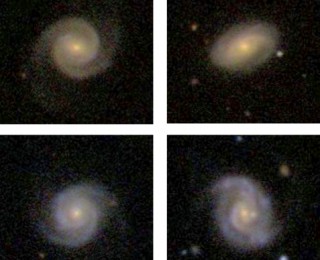
Red spirals are not dead
The discovery of a population of red spiral galaxies has caused astronomers to questions the relation between galaxy color and morphology: a closer look at their star formation rates reveals a clearer picture.

The discovery of a population of red spiral galaxies has caused astronomers to questions the relation between galaxy color and morphology: a closer look at their star formation rates reveals a clearer picture.
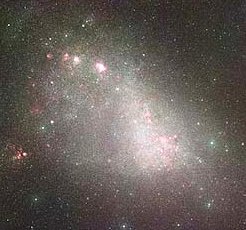
In this paper, the authors describe a new galaxy simulation that includes molecular hydrogen, the site of star formation, and discuss what happens with and without it.
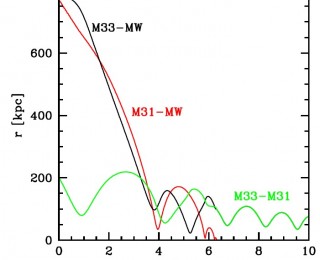
HST measurements of stellar proper motions in M31 reveal that the Andromeda galaxy is in radial (head-on collision) orbit towards the Milky Way. The huge strike will happen 4 billion years from now according to the simulations. It will likely affect also the environment of the Sun and the location of the solar system.
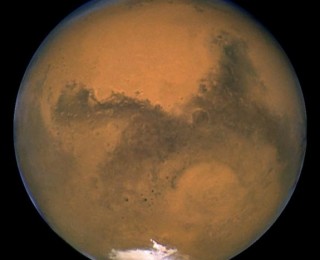
Mars is observed to have sedimentary rocks, which provide proof that liquid water once existed on the Martian surface. However, the surface of Mars would have been too cold to have permanent rivers and lakes; the authors of this paper suggest seasonal snowmelt could create enough liquid water to form these rocks.
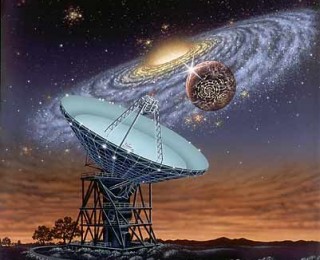
This paper describes the first-ever application of the technique of Very Long Baseline Interferometry (VLBI) to the Search for Extra-Terrestrial Intelligence (SETI).
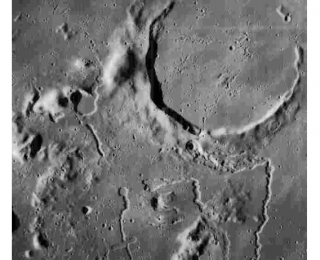
A brief history of scientists’ views on water and the Moon.