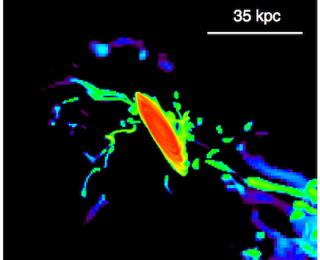
How does the Milky Way get its gas?
While the known gas in the Milky Way’s halo cannot supply enough gas to fuel star formation, what about the gas we haven’t observed yet?

While the known gas in the Milky Way’s halo cannot supply enough gas to fuel star formation, what about the gas we haven’t observed yet?
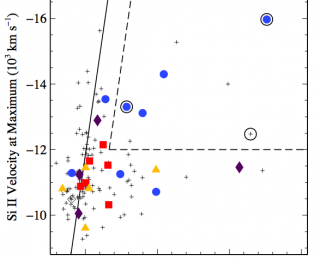
What if type Ia supernova are not all made the same way? For the first time, a study links type Ia supernova explosions to their parent systems, uncovering evidence for two different ways to produce these purportedly “standard” explosions.
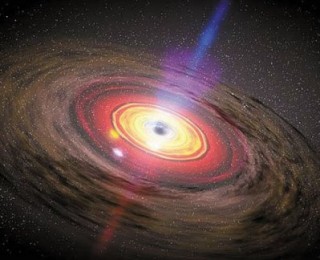
We know that supermassive black holes exist, but how did they get so big? In this paper, the authors seek to shed some light on their progenitors – rapidly accreting, intermediate-mass black holes.
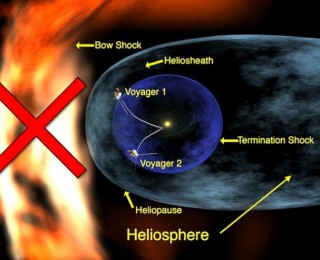
Recent data from IBEX has revealed that our decades-old model of the heliosphere is wrong: there is no bow shock ahead of the heliosphere in the ISM.
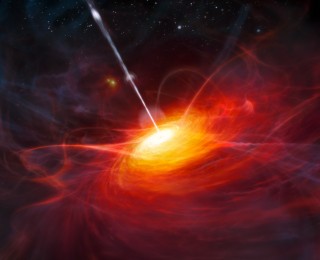
How does AGN activity influence star formation in active galaxies? Dai et al. combine multi-wavelength observations of 32 quasars to bring us closer to the answer.
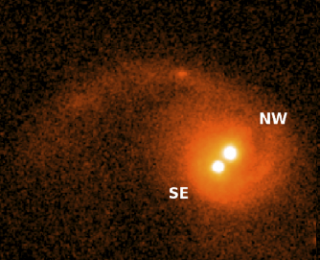
It has long been known that galaxies can merge; thus, we should expect their central supermassive black holes to interact as well. However, our ability to study this is limited as most mergers happen in the distant universe. The exceptional nearby source CID-42 can be explained by a recent binary or triple supermassive black hole interaction, giving astronomers a rare chance to witness the repercussions of such an event.