by Elizabeth Lovegrove | Dec 18, 2012 | Current Events, Guides
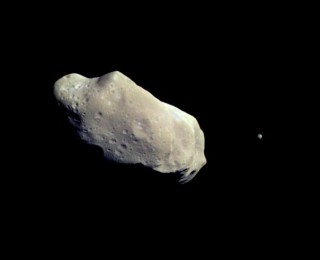
Let’s be serious for a moment: nothing dire is going to happen on December 21st. Rest easy. But in celebration I’ve decided to count down my top five favorite astronomical doomsday scenarios, ordered from most to least plausible.
by Alice Olmstead | Nov 25, 2012 | Guides, Personal Experiences
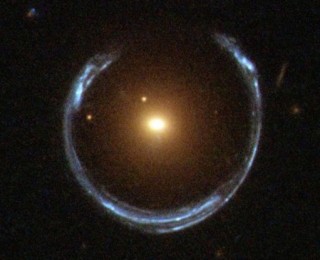
I recently attended a two-week crash course in the “Astrophysical Applications of Gravitational Lensing”. In this post, I overview a few of the ways astronomers employ lensing to study the Universe, from extrasolar planets to distant quasars and large-scale structure.
by Elizabeth Lovegrove | Sep 22, 2012 | Current Events, Guides
Fact: Jupiter is the best planet. What’s not to like? Big, beautifully stripey, four exciting moons, hurricane three times the size of the Earth, lots of fascinating hydrodynamics…I could go on. But Jupiter isn’t just awesome on its own. It was also the site of the first observed extraterrestrial impact event, and is routinely struck by asteroids and comets. Last week on Monday the 10th another piece of cosmic debris impacted the planet, producing a brief fireball spotted by amateur astronomers and providing an excellent opportunity to reflect on the history of impacts in Jupiter and the solar system at large.Jupiter has 67 known satellites, but only 8 are considered regular, i.e. they have stable, prograde, roughly circular, roughly planar orbits. The rest of the satellites are irregular and are likely captures. Jupiter’s mass means that it scoops up nearly everything that passes near it. The area of gravitational influence around a body orbiting another, much larger body is called the Hill sphere. Within the Hill sphere a satellite can be considered to orbit the smaller object (the planet) rather than the central one (the Sun). The Earth has a Hill sphere radius of about 1.5 million km, or 1% of the distance between it and the Sun. Jupiter, on the other hand, has a Hill sphere radius of about 53 million km – 0.355 AU, or nearly 7% of the distance between it and the Sun. This radius is well away from the bulk of the main asteroid belt, but close enough to pick up strays – and anything foolish enough to come close to the giant planet.In 1993 astronomers Carolyn and Eugene Shoemaker...
by Elizabeth Lovegrove | Apr 29, 2012 | Current Events, Guides
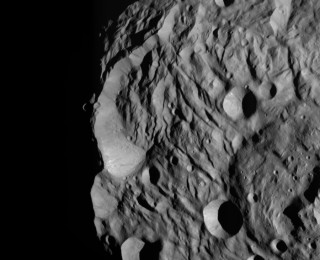
A coalition of willing billionaires, spaceflight professionals, and scientific advisors under the banner of Planetary Resources have announced their intention to go out there and mine themselves some asteroids. Are they serious? What’s going to happen? What does it mean for astronomers and planetary scientists? What contributions will the scientific community make, and what data do we stand to gain?
by Kim Phifer | Mar 19, 2012 | Current Events, Guides
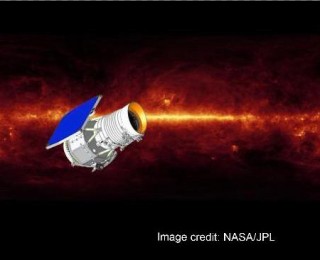
The Wide-field Infrared Survey Explorer (WISE) data release promises many new and exciting discoveries!
by Elizabeth Lovegrove | Mar 5, 2012 | Guides
I like Cracked. You probably do too. But like that old adage that every newspaper story is true except for the ones for which you happen to have firsthand knowledge, I found their recent article on 6 Real Planets That Put Science Fiction To Shame to be . . . lacking. Not lacking in funny, or facts, but lacking in my favorite planets, and some of the weirdest specimens the universe has yet to offer up. So, without further ado, here are 6 more real planets (plus a bonus) that any sci-fi editor would have rejected as “too out there” just a few decades ago.
