by Lauren Weiss | Feb 28, 2012 | Current Events, Guides
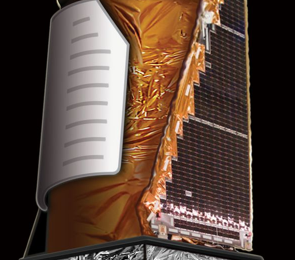
If Kepler does not obtain additional financial support, it will “close its eyes forever.” – Natalie Batalha.
by Maria Drout | Dec 22, 2011 | Guides
An overview of how astronomers identify and interpret light echoes.
by Elizabeth Lovegrove | Dec 11, 2011 | Guides
You’ve probably heard the old quote from Cosmos that “we are all made of stardust.” But that’s not the whole story. How that dust gets made is an intricate tale that spans a wide range of stellar processes and masses. This is the field of nucleosynthesis, the making of the chemical elements, and it is what allows us to make the simple statement: toothpaste comes from neutrinos.
by Guest | Nov 26, 2011 | Guides
This post is written by Benjamin Nelson, a graduate student in the Astronomy Department at the University of Florida. He works with Dr. Eric Ford on the characterization and dynamical evolution of extrasolar planets. He is currently developing an N-body Markov chain Monte Carlo for RV observations of exoplanet systems. Why is this important to astronomy? Inevitably in your astronomical career, you’ll attend some talk where the speaker mentions “MCMC” and “Metropolis-Hastings”, or maybe something about “priors” and “likelihood functions.” The latter terms refer back to a Bayesian framework, while the former terms are the numerical tools, both of which are rarely covered in undergraduate astronomy/physics. Although Bayes’ theorem has been around for more than 200 years, computational advances within only the past couple decades have made it actually practical to solve problems involving Bayesian techniques. Learning statistical methods is like eating your vegetables: you probably won’t enjoy it, but it’ll be good for you in the long run. It is hardly motivating for an astronomy grad student to pick up an introductory book on Bayesian statistics without some practical application in mind, but a solid knowledge of Bayesian methods is a great way to find common ground in other, unfamiliar astronomical subfields, or even other disciplines of science. The purpose of this astrobite is to familiarize the reader with conventional Bayesian jargon (sugar coated with some astronomy) and lay out the ingredients to code a Markov chain Monte Carlo from scratch. Bayes’ Theorem: In short, Bayes’ theorem allows us to update our knowledge of a model system using new sets of observations. We use this to quantify the...
by Elizabeth Lovegrove | Sep 25, 2011 | Guides, Personal Experiences
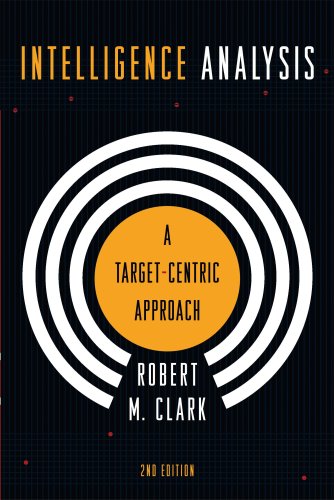
Astronomy has a kindred cousin, a cool one who wears his sunglasses at night: intelligence analysis. I don’t just mean reconnaissance satellites, either; the process of astronomy, that of observing and drawing conclusions, is possibly the most similar of all the sciences to the process of intelligence gathering. Both fields deal with low signal-to-noise regimes that are based primarily on observation rather than experimentation. Both fields must continually account for errors and biases that could easily lead to false or falsely credited conclusions. And thus it behooves us as astronomers to learn from our cousins on the other side of the fence, who may not have been in the business quite as long or have quite as much ground to cover, but who certainly have a lot more pressure to produce results. That’s why today I’m going to be talking about Robert M. Clark’s key textbook Intelligence Analysis: A Target-Centric Approach, and what lessons it holds for you as a professional scientist.

by Lauren Weiss | Sep 21, 2011 | Guides, Personal Experiences
When we dream of other worlds, there is one thing that drives our fantasies of life above all else: water. Most organisms on Earth rely on this molecule for survival. Although we might imagine life forms that do not require water, planets with water are the most obvious places to search for life—or at least for life as we know it.Thus, the discovery of the first potential “water world” in 2009 was a turning point in exoplanet science. At the time, I was a senior at Harvard University working with David Charbonneau, whose team and their robotic telescopes discovered the super-Earth GJ 1214b when it transited its star. In a Nature publication, Dave describes the discovery.The planet is just the right density to be made entirely of water. However, the discovery of GJ 1214b only suggests its watery nature; the planet could have a dense, rocky core and a large but light atmosphere of hydrogen and helium instead.To distinguish between these possibilities, several groups have performed transmission spectroscopy. This technique measures the starlight that passes through the planet’s atmosphere while the planet transits its star. By measuring the light transmitted at different wavelengths, it is possible to construct a spectrum of the planet’s atmosphere. Absorption and emission lines in the spectrum can reveal chemicals in the atmosphere.Counter-intuitively, the scientists studying GJ 1214b are not looking for spectral lines due to water. Models show that adding water vapor to the atmosphere of GJ 1214b would flatten the spectrum, smearing out all features. However, a high layer of clouds could also produce such a spectrum, so a flat spectrum does not...
