
Featured Astrobites
Our latest posts
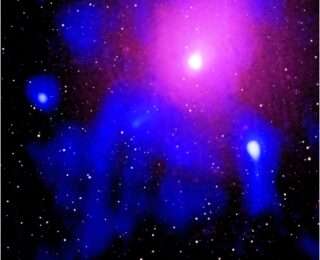
What’s Going On in Galaxy Clusters?
There is a lot we don’t understand about the gas in galaxy clusters. Today’s paper provides new insight using a powerful X-ray space telescope!
Inclusive teaching practices help all students learn, but physicists are reluctant to change the way they teach
In today’s bite we discuss the use of inclusive teaching practices in physics classrooms and why physics professors are unlikely to implement more even though they help all students learn more effectively!
A Commentary on Academic Astronomy: From the perspective of The Little Prince
In today’s bite, the author dives into this beloved classic to search for lessons it has for everyone in academic astronomy
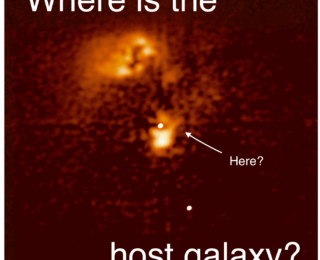
“Undressing” a Naked Quasar: HE0450-2958
Today’s guest post presents an investigation of HE0450-2958—a quasar with a “missing” host galaxy.
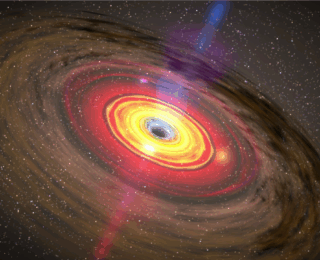
Quasars at Work: My photons come from a land where the accretion disks glow and the X-ray coronas plunder (energy from the disk)
In this exciting new paper, our authors show that in quasars, X-ray coronas fueled by energy stolen from the accretion disk around the black hole may be responsible for the interesting ultraviolet and optical emission we see!
If primordial black holes are dark matter, would we know?
Today’s paper explores the detectability of primordial black holes as a potential dark matter candidate.
Beyond astro-ph
Astronomy beyond the research
No Results Found
The page you requested could not be found. Try refining your search, or use the navigation above to locate the post.
Navigating careers in astronomy
Career advice
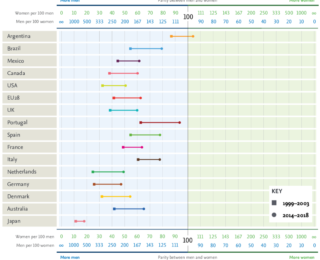
Is there still a gender gap in research?
Today’s beyond post looks at a study into advances in closing the gender gap in academia.
Outreach for Astronomers: Letters to a Pre-Scientist and MIT Astrogazers
In our new series on outreach, we highlight activities you can do at any stage of your career – first up, Letters to a Pre-Scientist and MIT Astrogazers!
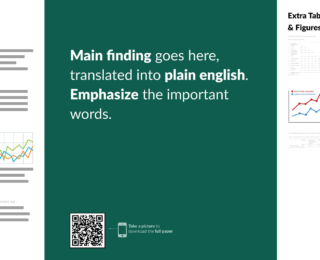
Fixing academic posters: the #BetterPoster approach
How can we make academic posters clear, concise, and quick without sacrificing information?