• RSS
  • Submit a Guest Post
  • Undergraduates: Submit your Research!
  • Suggest a Paper Topic!
astrobites
  • About
    • About Astrobites
    • Meet the Authors
    • Statement of Inclusivity
    • Copyright & Permissions
  • Latest Research
    • Daily Paper Summaries
    • Classics
    • Undergrad Research
    • Physical Review Coverage
  • Beyond astro-ph
    • Beyond astro-ph Library
    • Interviews
    • Career Navigation
    • Personal Experiences
    • Current Events
    • Teaching with Astrobites
  • Guides
    • EM Spectrum
    • Galaxies & AGNs
    • Spectroscopy and Spectral Lines
    • Adaptive Optics
    • Gravitational Waves
    • Transient Astronomy
    • Astrophysical Software
    • Graduate School
    • Writing a personal statement for grad apps
    • First Observing Run
    • …More Guides!
Select Page
I (exoplanet HR 5183 b) came in like a wrecking ball

I (exoplanet HR 5183 b) came in like a wrecking ball

by Kylee Carden | Mar 6, 2024 | Daily Paper Summaries

Everyone wants to find a habitable planet. The authors of today’s paper make a compelling case that the HR 5183 system is not the best place to look.

Tag you’re it!

Tag you’re it!

by Amaya Sinha | Feb 29, 2024 | Daily Paper Summaries

Chemical tagging is the idea that using the chemistry of stars we can reconstruct their birth clusters. But can it actually be done?
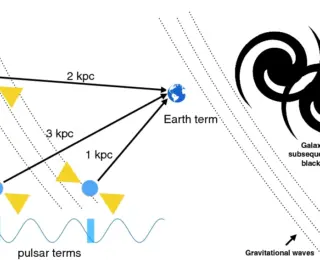
How to Find Supermassive Black Hole Binaries in Pulsar Timing Array data without the Pulsars

How to Find Supermassive Black Hole Binaries in Pulsar Timing Array data without the Pulsars

by William Lamb | Feb 26, 2024 | Daily Paper Summaries, PRJ

Pulsar timing arrays could localise individual sources of gravitational waves to host galaxies. The problem is, it’s so computationally difficult! This paper shows us a faster way.
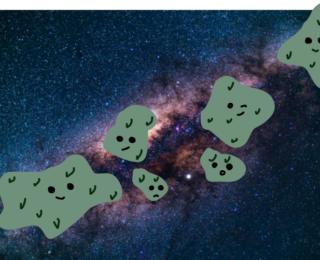
Deciphering the Milky Way’s neutrino blobs

Deciphering the Milky Way’s neutrino blobs

by Samantha Wong | Feb 24, 2024 | Daily Paper Summaries, PRJ

Today’s authors look for the origin of the blobby neutrino emission IceCube sees in the Milky Way!

Supermassive Black Hole Pairs Hide Away Together

Supermassive Black Hole Pairs Hide Away Together

by Nathalie Korhonen Cuestas | Feb 23, 2024 | Daily Paper Summaries

Are dual active galactic nuclei (AGN) hiding away together behind gas as they spiral in towards each other?

Small but Mighty: Disk Chemistry in an M-Dwarf System

Small but Mighty: Disk Chemistry in an M-Dwarf System

by Catherine Slaughter | Feb 19, 2024 | Daily Paper Summaries

Today’s paper takes a look at circumstellar disks’ chemistries, and addresses how their chemical composition can be impacted by their host stars.

« Older Entries
Next Entries »

Loading

Follow our socials

  • Bluesky
  • Facebook
  • Instagram
  • RSS Feed

More Posts About

AAS AGN astronomy astrophysics binary stars black holes cosmology dark matter dwarf galaxies exoplanets galaxies galaxy evolution gravitational waves habitability JWST Kepler Milky Way observations planetary science planet formation protoplanetary disks radio astronomy simulations solar system spectroscopy star formation stars stellar evolution supernovae theory

Posts by Category

  • Accessibility
  • Applications
  • Beyond
  • Book Reviews
  • Career Navigation
  • Classics
  • Climate Change
  • Course Assignments
  • Crossposts
  • Current Events
  • Daily Paper Summaries
  • Game Reviews
  • Guides
  • Historical Astronomy
  • Instrumentation
  • Interviews
  • Outreach
  • Personal Experiences
  • PRJ
  • Quick Notes
  • Satellites
  • Teaching
  • Undergraduate Research

More Astronomy

  • AAS
  • AAS Nova
  • astro-ph
  • AstroBetter
  • APOD

Read Astrobites in Other Languages

  • Astrobitos (Spanish)
  • Astropontos (Portuguese)
  • staryab (Farsi)

Listen to Astrobites

  • astro[sound]bites

Discover More Incredible Science

  • ScienceBites Network
  • RSS

© 2026 Astrobites | All Rights Reserved | Supported by AAS | Designed by Elegant Themes | Powered by WordPress