by Alice Olmstead | Feb 16, 2012 | Daily Paper Summaries
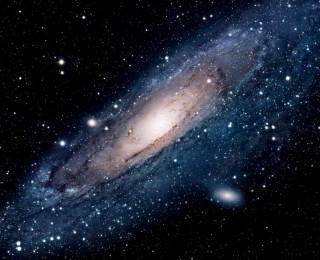
A specific class of elliptical galaxies called compact ellipticals, or cEs, are unusually compressed. Some speculate that these galaxies are petite because their outer layers have been stripped away by a neighboring galaxy; however, an alternative theory claims that these are regular elliptical galaxies that simply formed small and never contained stars in their outer regions. In order to differentiate between these two models, Howley et al. 2012 measured the dynamics of individual stars in one of our nearest neighbors, the compact elliptical M32.
by Elisabeth Newton | Feb 15, 2012 | Daily Paper Summaries
The basis for something called the “G dwarf problem” is the comparison between observations and a simple model for chemical evolution in a galaxy. To cut to the chase, there are fewer very metal poor G dwarfs than are predicted by this basic understanding. This discrepancy has been shown to hold for the Milky Way as well as for other galaxies. It also holds for K dwarfs in the Milky Way – and now for M dwarfs as well.
by Elisabeth Newton | Feb 1, 2012 | Daily Paper Summaries
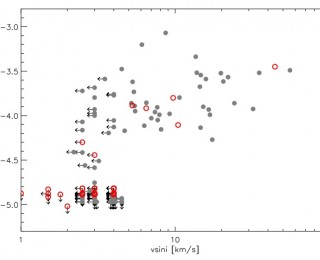
This paper delves into some of the physical properties of early M dwarfs (M0-M4.5), focusing on chromospheric/magnetic activity and rotation. The authors present a catalog of activity and rotation for 334 early M dwarfs.
by Elisabeth Newton | Jan 18, 2012 | Daily Paper Summaries
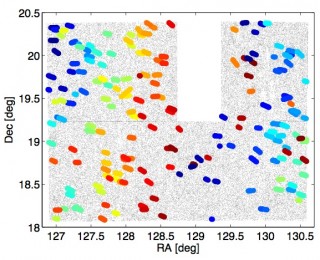
Title: Asteroid rotation periods from the Palomar Transient Factory survey Authors: D. Polishook, E. O. Ofek, A. Waszczak, S. R. Kulkarni, A. Gal-Yam, O. Aharonson, R. Laher, J. Surace, C. Klein, J. Bloom, N. Brosch, D. Prialnik, C. Grillmair et al. First Author’s Institution: Benoziyo Center for Astrophysics, Weizmann Institute of Science, IsraelDetermination of the rotation periods of asteroids has a number of applications. When considering an asteroid individually, it can help one to understand the physical properties of an individual asteroid, including its shape and whether or not it’s a binary. In a statistical sense, the rotations of the entire population of asteroids can help one to understand the physical processes that govern asteroid rotation. The two mechanisms that influence an asteroid’s rotatation are collisions and something called the YORP effect, in which photons from the Sun are actually able to accelerate asteroids through absorption and re-emission. There’s a nice discussion of this type of science which includes a description of the YORP effect in this Cornell press release, while this Discovery news story reports on the first direct detection of the YORP effect (which combines the initials of four different people).*Currently there are 3,700 asteroids with measured rotation periods; using the Palomar Transient Factory, these authors aim to eventually measure rotation periods for 10,000 asteroids. (PTF also finds supernovae, see for example this discovery). In this paper, Polishook et al. report on the identification of 624 asteroids in the PTF survey, 20% of which are new discoveries, and 88 new rotation period measurements. All of the asteroids identified belong to the main asteroid belt. The smallest asteroids...
by Michelle Kislak | Jan 18, 2012 | Daily Paper Summaries
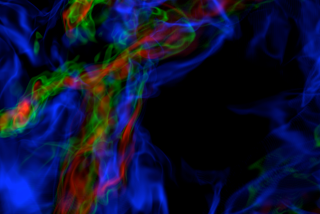
The first simulations of low-mass star formation on parsec scales to include protostellar feedback successfully reproduce observed mass functions, luminosities, and clustering properties.
by Kim Phifer | Jan 16, 2012 | Daily Paper Summaries
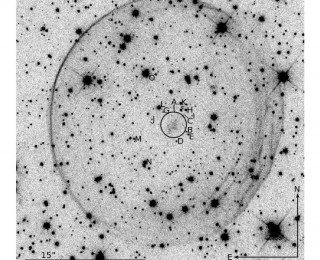
Schaefer & Pagnotta search supernova remnant 0509-67.5 for signs of an ex-companion to the white dwarf which exploded as a type Ia supernovae.
