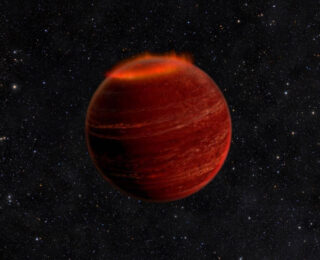
Don’t change the station! Substellar objects are up next!
Today’s authors make the first direct observation of a brown dwarf, a substellar object that can be considered a failed star.

Today’s authors make the first direct observation of a brown dwarf, a substellar object that can be considered a failed star.

Our smallest and most common stellar siblings might create conditions favorable for powerful exoplanetary hurricanes.

For the first time ever, a planet has been found orbiting a white dwarf. Check out today’s Astrobite to learn more!

M dwarfs are known to be really active when they’re young, which is bad for habitability. But what about old M dwarfs?
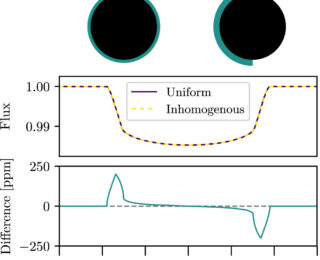
As the field of exoplanet atmospheric science rapidly moves towards understanding these fascinating worlds as complex, three-dimensional entities, today’s paper explores how we can find non-uniform cloud cover on exoplanets using JWST!
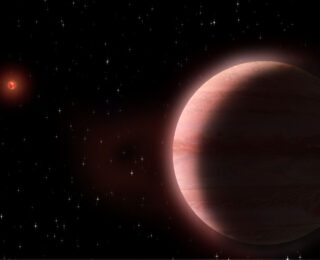
Today’s bite details only the second astrometric detection of a planet candidate and the first using radio interferometry.