
Life finds a way (even on M dwarfs?)
M dwarfs are known to be really active when they’re young, which is bad for habitability. But what about old M dwarfs?

M dwarfs are known to be really active when they’re young, which is bad for habitability. But what about old M dwarfs?
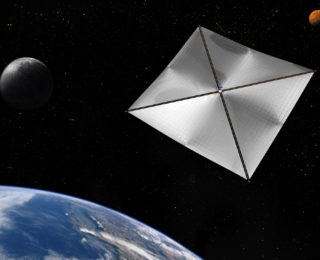
Interstellar travel is difficult with traditional fuel-powered rockets. Today’s paper explores how we could instead use sailing space ships, propelled by photons and particles from astrophysical sources. Spoiler alert: Sailing ships could almost reach the speed of light!

Lifeforms like trees cast unique shadows on the Earth’s surface. Understanding this effect may enable remote detection of life on exoplanets.

For life as we know it, atmospheric composition plays a huge part in planetary habitability. Today we explore a theoretical framework for characterizing and predicting planetary atmospheres, and how that framework can help in the search for Earth-like life on planets beyond our own.
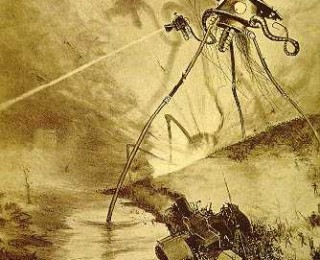
Using a laser we can carefully edit the telltale signs of the Earth’s presence, hiding ourselves away or announcing our presence to other life in the universe. But doing so may be fraught with unknowable consequences that we can never undo. Maybe it’s best to just stay behind the galactic sofa.

Can life hop from planet to planet like a virus in an epidemic? Can we even detect whether this has happened?