LOFAR: science at the longest wavelengths
The LOFAR low-frequency radio interferometer is poised to make exciting discoveries in transient searches, high-energy astrophysics, and cosmology.

The LOFAR low-frequency radio interferometer is poised to make exciting discoveries in transient searches, high-energy astrophysics, and cosmology.
Lensing occurs when the mass of a foreground object distorts and magnifies the light from a background galaxy or quasar, sometimes even creating multiple images. It probably isn’t a stretch to say that the neatest thing about lensing is that you can typically see two to four images of the same galaxy. But something else that’s cool is that these distant background objects are magnified, making it possible to study them in detail when otherwise they might not be seen at all: in this way, gravitational lenses act as natural cosmic telescopes.
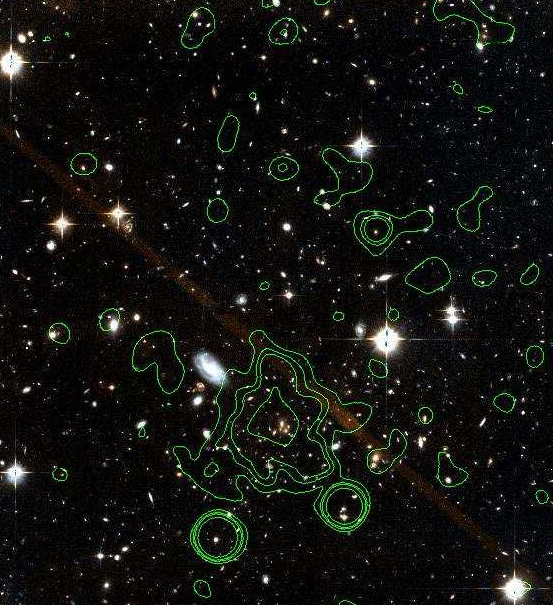
The authors probe the population of early-type galaxies in the furthest galaxy clusters to date.
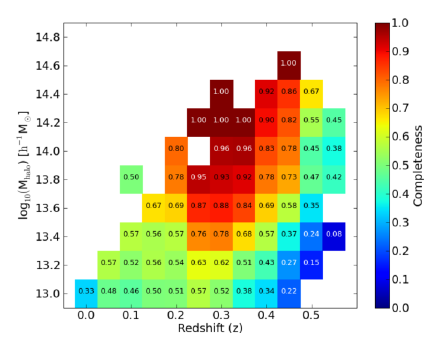
We can use galaxy clusters for many different science goals, but first we need to figure out where they are.
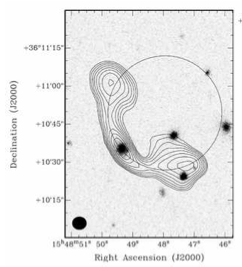
Freeland & Wilcots (2011) present observations of seven “double bent” radio galaxies which they use to measure the density of the intergalactic medium in galaxy groups. They use these observations to draw conclusions about the disruption of dwarf galaxies and the baryon content of these groups.
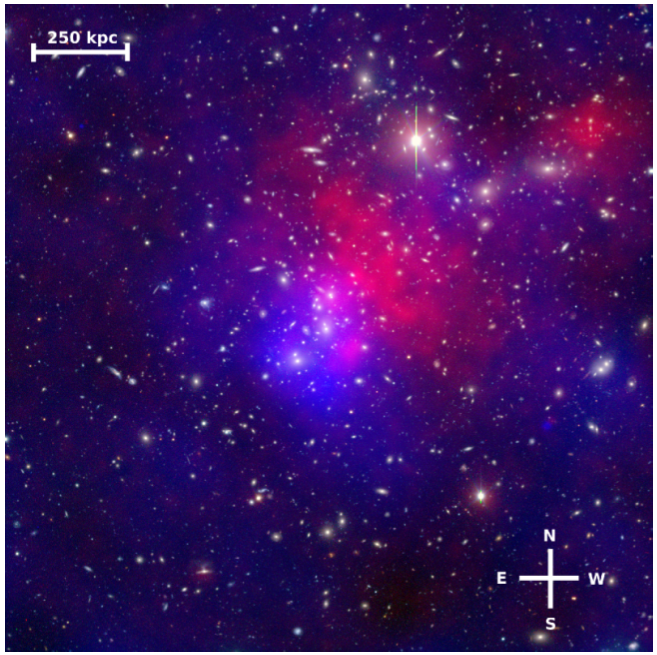
Where can you find ‘ghost’, ‘dark’, ‘stripped’, and ‘bullet’ clusters? The Pandora Cluster, which has become an excellent laboratory for studying the nature of other shady characters in our universe like dark matter.