Meet the AAS Keynote Speakers: Professor Alice Shapley
Come ask questions at Dr. Alice Shapley’s #AAS234 talk to learn about interesting events that happened a long time ago, to galaxies far, far away!

Come ask questions at Dr. Alice Shapley’s #AAS234 talk to learn about interesting events that happened a long time ago, to galaxies far, far away!
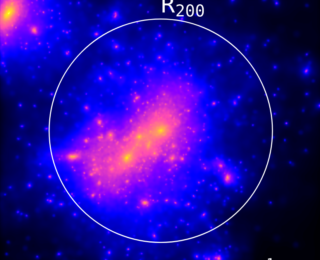
Using simulations to explore the fate of galaxies falling into clusters
Applying color-magnitude diagrams to distant, semi-resolved galaxies may break new ground in understanding stellar populations on a massive scale.
A novel approach to estimate their mass may help reveal the relationship between supermassive black holes and the galaxies they inhabit.
Today’s post presents SIMBA, a cosmological simulation that focuses on understanding the growth and evolution of black holes and their host galaxy.
Star-forming galaxies form stars at different rates. Could this be the model that reveals the underlying physics?