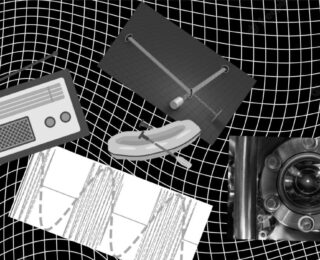
How (and How Not) to Build High-Frequency Gravitational Wave Detectors
Detecting high-frequency gravitational waves is a challenging task. Today’s paper proposes several novel experimental methods with promising sensitivities.

Detecting high-frequency gravitational waves is a challenging task. Today’s paper proposes several novel experimental methods with promising sensitivities.
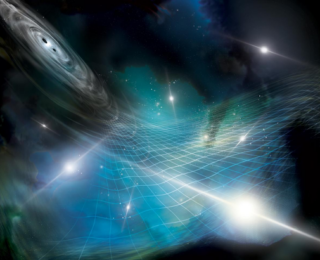
In this Astrobite, we look at some of the potential sources of the newly discovered gravitational wave background. Supermassive Black Hole Binary mergers are believed to be the primary culprit, but several other fascinating phenomena could also be contributing.
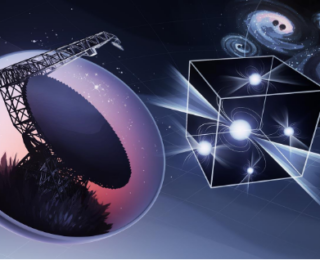
In eight new papers, the North American Nanohertz Observatory for Gravitational waves (NANOGrav) presents evidence for a gravitational wave background. In this bite, we provide an overview of their results and their implications
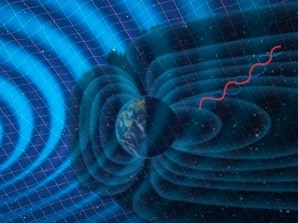
Can planetary magnetospheres be used as gravitational wave detectors? Find out in today’s paper!
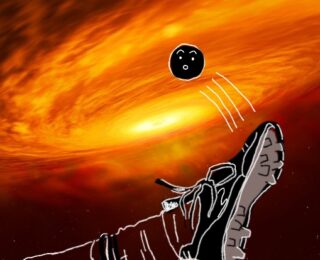
Today’s bite kicks black holes through an accretion disk, come find out if they score!
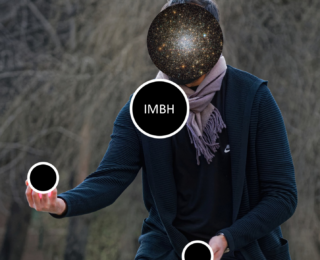
Today’s authors explore a new formation channel for forming intermediate mass black holes!