
by Storm Colloms | Apr 2, 2024 | Daily Paper Summaries
There’s a space race that can last hundreds of millions of years: the race for two black holes to merge. Find out how we can use the gravitational wave background as our stopwatchin today’s bite!
by William Smith | Mar 29, 2024 | Daily Paper Summaries
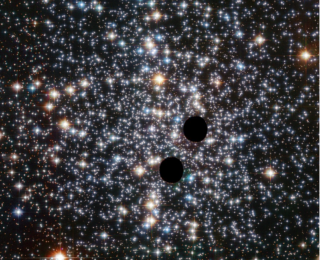
In today’s bite, the authors combine two types of simulations to better understand how intermediate-mass black holes might form in dense nuclear star clusters.
by William Lamb | Feb 26, 2024 | Daily Paper Summaries, PRJ
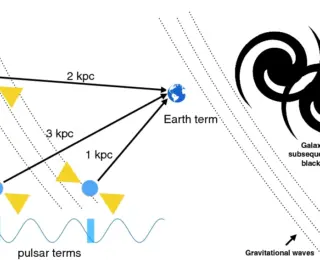
Pulsar timing arrays could localise individual sources of gravitational waves to host galaxies. The problem is, it’s so computationally difficult! This paper shows us a faster way.
by Katherine Lee | Feb 2, 2024 | Daily Paper Summaries
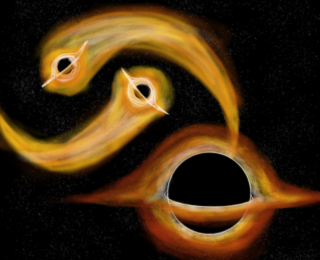
What happens when a black hole merger stalls at the final parsec? Nothing, unless another black hole can shake things up a bit!
by Storm Colloms | Feb 1, 2024 | Daily Paper Summaries
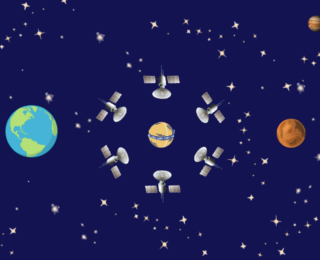
The dynamical universe sends out ripples creating a massive symphony of gravitational waves. Learn how we can tune into all these melodies with new detectors in today’s post!
by Cole Meldorf | Jan 31, 2024 | Daily Paper Summaries
In this Astrobite, we see if gravitational waves can help us find theoretical horizonless compact objects, exotic objects predicted by modern alternatives to General Relativity!
