Meet the AAS Keynote Speakers: Prof. Mario Jurić
Today we interview Solar System scientist and expert in Rubin Observatory data, Prof. Mario Jurić from the University of Washington, for his Plenary Talk at #AAS248!

Today we interview Solar System scientist and expert in Rubin Observatory data, Prof. Mario Jurić from the University of Washington, for his Plenary Talk at #AAS248!
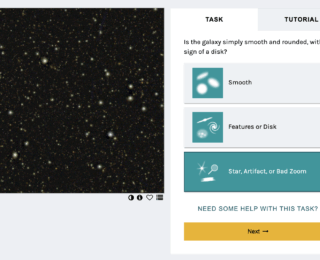
Citizen scientists can make important contributions to the study of galaxies (like the discovery of new gravitational lenses!), and their work can also be used to train better machine learning models.
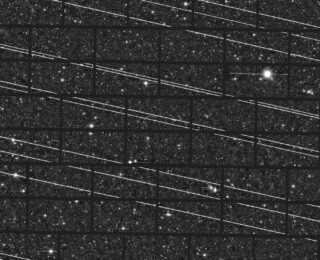
Astronomers (and one SpaceX engineer) met at a three-day workshop to figure out how to prevent satellites from obstructing LSST science.
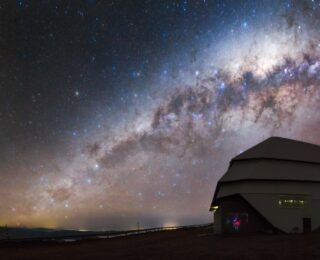
Rubin will give us a wider and deeper view of the Universe than ever before. How many of the Milky Way’s tiny friends will it discover?
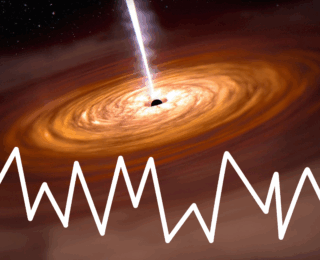
When we don’t have spectra, we can estimate the distance to a quasar by calculating its photometric redshift. Today’s authors present a new way to use the ‘flickering’ of quasars to improve these distance estimates.
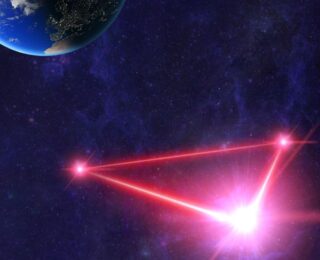
The upcoming LISA mission promises to detect many gravitational wave events, but can it attribute any of them to a host galaxy? Let’s find out!