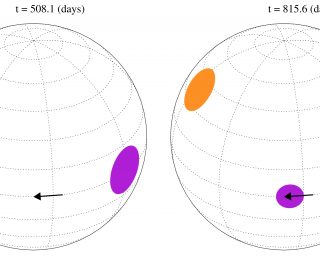
Starspots to Measure Small Differential Rotation Rates
On using photometric data from Kepler to study starspots, and to measure differential rotation rates.

On using photometric data from Kepler to study starspots, and to measure differential rotation rates.
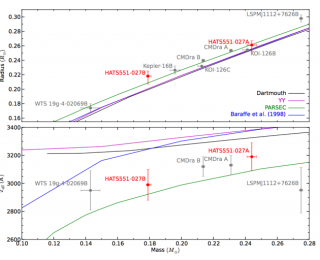
Very low-mass M-dwarfs are a missing link in our theory of stellar interiors. Stars this small probably have fully convective interiors, but we don’t have a complete understanding of how that affects global properties like radius or temperature. It’s important to get right, if for no other reason because lots of exoplanets orbit M-dwarfs.
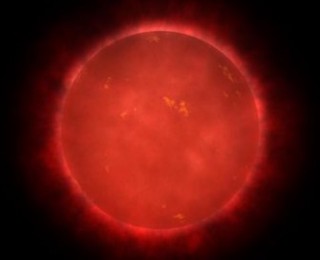
Heavy stars live like rock stars: they live fast, become big, and die young. Low mass stars, on the other hand, are more persistent, and live longer. Fusing hydrogen slow and steady wins the stellar age-race.
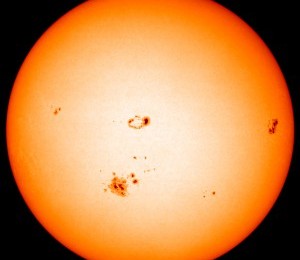
While the Sun is an excellent starting point in a quest to understand magnetism, the authors of today’s paper want more. They take advantage of something only relatively cool stars can have in their atmospheres to study magnetic fields: molecules in starspots.
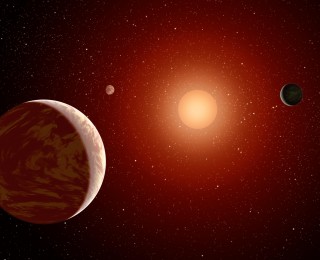
Could the properties of an M-dwarf that might make it inhospitable also give it transformative powers? Could the star’s gravity and violence strip away a planet’s thick atmosphere, or envelope, to reveal a habitable core?
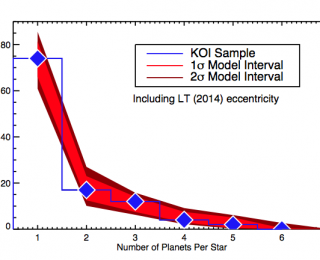
Many exoplanets in our galaxy are all alone. They have no one to cuddle up to on those cold, lonely nights in space…