Stellar Archeology: A Cosmological View of Dwarf Galaxies
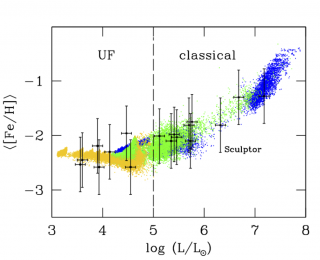
Living metal-poor stars represent the fossil records of the early cosmic star formation.

Living metal-poor stars represent the fossil records of the early cosmic star formation.
The basis for something called the “G dwarf problem” is the comparison between observations and a simple model for chemical evolution in a galaxy. To cut to the chase, there are fewer very metal poor G dwarfs than are predicted by this basic understanding. This discrepancy has been shown to hold for the Milky Way as well as for other galaxies. It also holds for K dwarfs in the Milky Way – and now for M dwarfs as well.
Using the unique chemical composition found in every star’s atmosphere, the authors identify potential members of a dissolved star cluster in the Sextans dwarf spheroidal galaxy and investigate the origin of dwarf galaxies in the Milky Way halo.
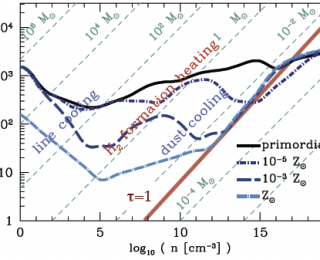
An extremely metal-poor star, which was first discussed on astrobites by Anna in September 2011, may be evidence that dust-induced fragmentation was the catalyst for the change from the top-heavy Initial Mass Function (IMF) of the first stars to the steep IMF we observe today.
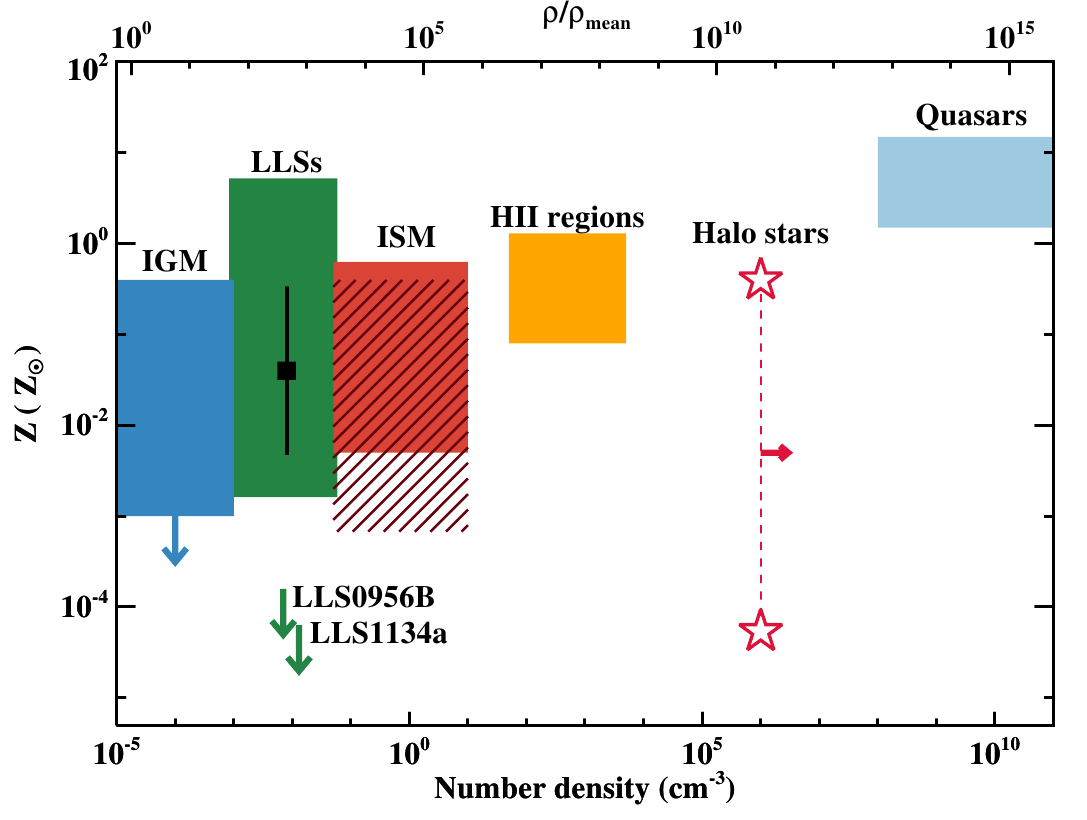
Fumagalli et al. may have observed the first example of metal-free gas untouched after the Big Bang.
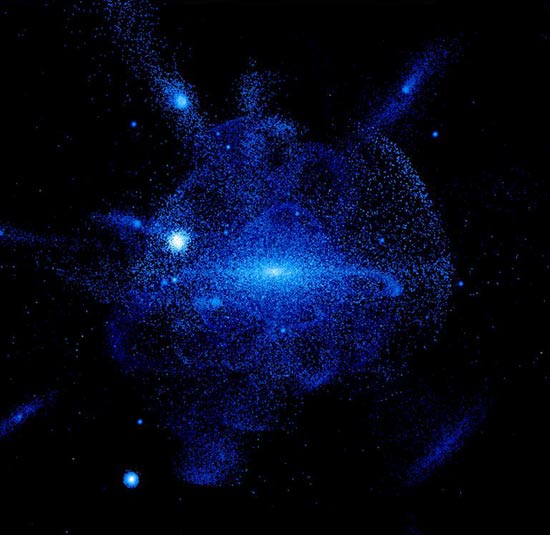
The Milky Way’s stellar halo – a roughly spherical distribution of stars surrounding our spiral galaxy – is a valuable tool for probing the early evolution of our galaxy. The stellar halo contains some of the oldest stars in our galaxy, whose properties reflect that of the environment in which they formed. This paper focuses on using cosmological simulations of galaxy formation to match the observed structure and kinematics (how the stars move) of stars in Milky Way’s halo.