• RSS
  • Submit a Guest Post
  • Undergraduates: Submit your Research!
  • Suggest a Paper Topic!
astrobites
  • About
    • About Astrobites
    • Meet the Authors
    • Statement of Inclusivity
    • Copyright & Permissions
  • Latest Research
    • Daily Paper Summaries
    • Classics
    • Undergrad Research
    • Physical Review Coverage
  • Beyond astro-ph
    • Beyond astro-ph Library
    • Interviews
    • Career Navigation
    • Personal Experiences
    • Current Events
    • Teaching with Astrobites
  • Guides
    • EM Spectrum
    • Galaxies & AGNs
    • Spectroscopy and Spectral Lines
    • Adaptive Optics
    • Gravitational Waves
    • Transient Astronomy
    • Astrophysical Software
    • Graduate School
    • Writing a personal statement for grad apps
    • First Observing Run
    • …More Guides!
Select Page
New Directly Imaged Planet Challenges Planet Formation Theories

New Directly Imaged Planet Challenges Planet Formation Theories

by Samuel Factor | Jan 18, 2018 | Daily Paper Summaries

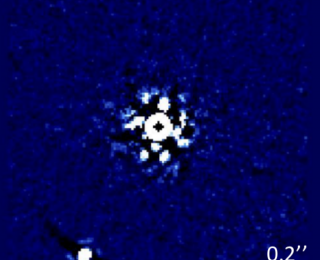
HIP 65426 b is the first planet discovered with the SPHERE imager on the VLT. It is an intriguing planet for future study of cloud formation but how did it form in the first place?
Meet the AAS Keynote Speakers: Mansi Kasliwal

Meet the AAS Keynote Speakers: Mansi Kasliwal

by Caroline Huang | Jan 11, 2018 | Career Navigation, Current Events

Meet plenary speaker Mansi Kasliwal, who is excited about rare, new transients and has a passion for discovery.

Meet the AAS Keynote Speakers: Adam Riess

Meet the AAS Keynote Speakers: Adam Riess

by Amber Hornsby | Jan 8, 2018 | Career Navigation, Current Events

To unlock the secrets of the (local) universe, Adam Riess observes the brightness of supernovae and Cepheid variables to measure the distance to galaxies far, far away. Read more about his research before his plenary talk at #AAS231 on Tuesday.

What is the Most Massive Object in the Universe?

What is the Most Massive Object in the Universe?

by Gourav Khullar | Dec 6, 2017 | Classics, Daily Paper Summaries

Trying to find the most massive galaxy cluster in the night sky can be hard. Comparing predictions of these masses to observed clusters? Even harder. An insight into the world of Halo Mass Functions and their tail-ends.

Hunting for the faintest galaxies

Hunting for the faintest galaxies

by Stacy Kim | Nov 29, 2017 | Daily Paper Summaries

The universe is filled with tiny, faint dwarf galaxies. The authors of this paper are on the hunt for them.

Planet Frequencies in the Galactic Bulge

Planet Frequencies in the Galactic Bulge

by Elisabeth Matthews | Nov 20, 2017 | Daily Paper Summaries

Microlensing could hold the key to studying planet formation in incredibly crowded regions of the galaxy, and today’s paper shows us how.

« Older Entries
Next Entries »

Loading

Follow our socials

  • Bluesky
  • Facebook
  • Instagram
  • RSS Feed

More Posts About

AAS AGN astronomy astrophysics binary stars black holes cosmology dark matter dwarf galaxies exoplanets galaxies galaxy evolution gravitational waves habitability JWST Kepler Milky Way observations planetary science planet formation protoplanetary disks radio astronomy simulations solar system spectroscopy star formation stars stellar evolution supernovae theory

Posts by Category

  • Accessibility
  • Applications
  • Beyond
  • Book Reviews
  • Career Navigation
  • Classics
  • Climate Change
  • Course Assignments
  • Crossposts
  • Current Events
  • Daily Paper Summaries
  • Game Reviews
  • Guides
  • Historical Astronomy
  • Instrumentation
  • Interviews
  • Outreach
  • Personal Experiences
  • PRJ
  • Quick Notes
  • Satellites
  • Teaching
  • Undergraduate Research

More Astronomy

  • AAS
  • AAS Nova
  • astro-ph
  • AstroBetter
  • APOD

Read Astrobites in Other Languages

  • Astrobitos (Spanish)
  • Astropontos (Portuguese)
  • staryab (Farsi)

Listen to Astrobites

  • astro[sound]bites

Discover More Incredible Science

  • ScienceBites Network
  • RSS

© 2026 Astrobites | All Rights Reserved | Supported by AAS | Designed by Elegant Themes | Powered by WordPress