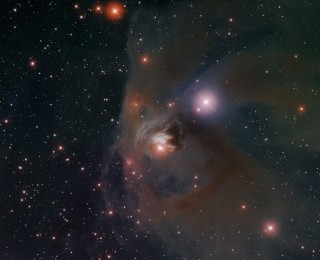
Searching for Giant Planets Around Baby Stars
How long does planetary migration take? Crockett et al. look for the answer by searching for hot Jupiters around extremely young stars.

How long does planetary migration take? Crockett et al. look for the answer by searching for hot Jupiters around extremely young stars.
Rafferty et al. study the effect of radio jets on the intracluster gas in Hickson Compact Group 62.
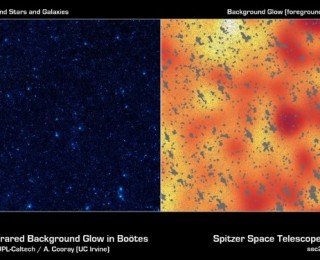
New observations at infrared background find a mysterious background glow on the sky, which is inconsistent with the previously proposed models for its origin. The authors suggest that the infrared glow could be coming from rogue stars that have been expelled from host galaxies out into the dark matter halos that surround galaxies.
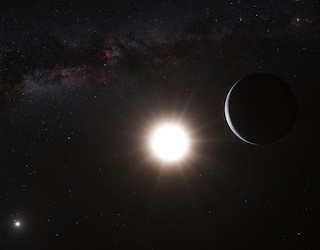
Astronomers recently announced the discovery of a short period Earth-mass planet in the Alpha Centauri system. Could Earth-mass planets exist in the habitable zones of binary stars?
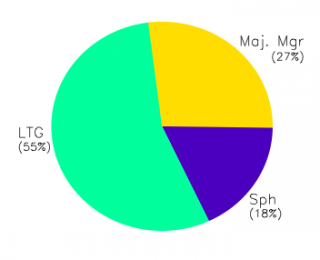
In this study, Kaviraj et al. find that major mergers only contribute a small percentage (17-27%) of the total star formation at a redshift of 2, when the Universe was 3.3 billion years old and vigorously creating new stars. This goes against what we once thought, and leaves the door open for other mechanisms to drive the global star formation rate in the early Universe.
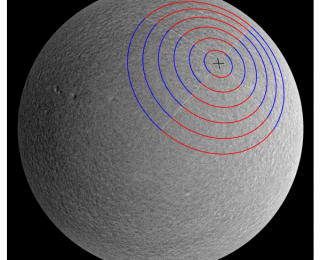
In the sun, subsurface flows are 20-100 times slower than what is predicted in widely used theoretical models.