by Caroline Morley | Dec 13, 2012 | Daily Paper Summaries
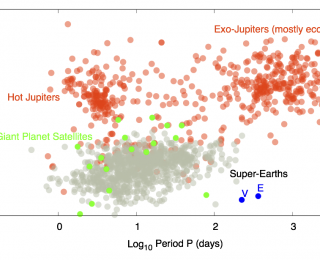
Do planets form in place, or migrate?
How planets form is still a remarkably open question. We haven’t even figured out definitively whether planets formed in the places they are now, or formed in different places and then migrated to their present locations.

by Kirit Karkare | Dec 12, 2012 | Personal Experiences
I’m spending the next month working on a telescope at the South Pole. In this first installment, I check out New Zealand and get my Extreme Cold Weather gear!
by Courtney Dressing | Dec 7, 2012 | Daily Paper Summaries
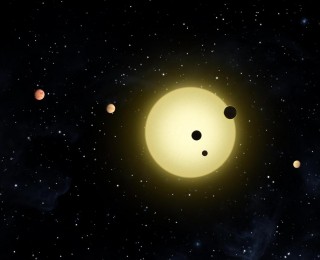
Can we infer the presence of multiple planets by monitoring how a star’s brightness changes outside of planetary transit?
by Justin Vasel | Dec 5, 2012 | Daily Paper Summaries
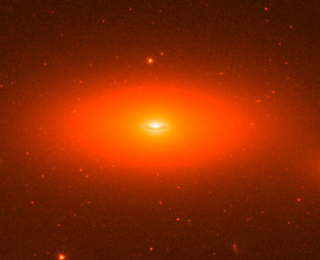
Weighing in at 17 billion solar masses, NGC 1277 contains the largest black hole discovered to date. What makes this black hole exceptional it not just its size, but also that it does not seem to follow the relationship between most supermassive black holes and their host galaxies known as the M-sigma relation. The author’s discuss their findings and possible implications.
by Alice Olmstead | Nov 25, 2012 | Guides, Personal Experiences
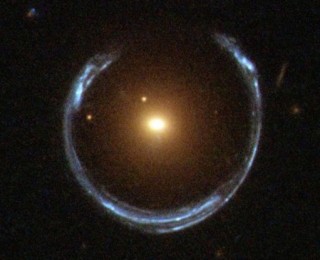
I recently attended a two-week crash course in the “Astrophysical Applications of Gravitational Lensing”. In this post, I overview a few of the ways astronomers employ lensing to study the Universe, from extrasolar planets to distant quasars and large-scale structure.
by Lauren Weiss | Nov 10, 2012 | Daily Paper Summaries
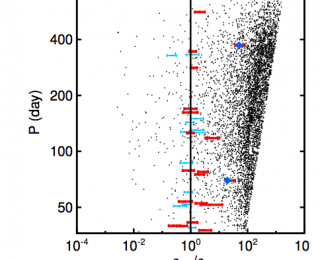
Title: A Paucity of Proto-Hot Jupiters on Super-Eccentric Orbits Authors: Rebekah I. Dawson, Ruth A. Murray-Clay, John Asher Johnson First Author’s Institution: Harvard-Smithsonian Center for Astrophysics Note: This post is based in part on a talk by Rebekah Dawson at the UC Berkeley Planet and Star Formation Seminar on Nov. 7, 2012.IntroductionHow do planets form, and after formation, how do they change their orbits (or “migrate”) to come to their present orbits? The increasing catalog of confirmed exoplanets (planets around other stars), in tandem with the also increasing list of exoplanet candidates discovered by the Kepler Mission, is making it possible to answer these questions through statistical tests of the exoplanet population.The authors investigate the formation history of a particular population of exoplanets called hot Jupiters, Jupiter-size planets in short orbits (in this study, 3-10 days) around their stars. The consensus among most scientists is that hot Jupiters are too big to have formed in their present location; they more likely formed oustide the “ice line,” or the radius at which water can freeze. This is because frozen water molecules can clump into tiny ice crystals, which could then aggregate into larger snowballs to form giant planets. Very few proposed mechanisms (such as core collapse, in which a clump of gas spontaneously collapses to form a planet) could form Jupiters inside the ice line, and these mechanisms are disfavored based on the current body of observations. Thus, theory says that hot Jupiters should have formed beyond the ice line and then migrated inward to their current, super-hot abodes. But how did they get there?There are two popular theories that could bring...
