• RSS
  • Submit a Guest Post
  • Undergraduates: Submit your Research!
  • Suggest a Paper Topic!
astrobites
  • About
    • About Astrobites
    • Meet the Authors
    • Statement of Inclusivity
    • Copyright & Permissions
  • Latest Research
    • Daily Paper Summaries
    • Classics
    • Undergrad Research
    • Physical Review Coverage
  • Beyond astro-ph
    • Beyond astro-ph Library
    • Interviews
    • Career Navigation
    • Personal Experiences
    • Current Events
    • Teaching with Astrobites
  • Guides
    • EM Spectrum
    • Galaxies & AGNs
    • Spectroscopy and Spectral Lines
    • Adaptive Optics
    • Gravitational Waves
    • Transient Astronomy
    • Astrophysical Software
    • Graduate School
    • Writing a personal statement for grad apps
    • First Observing Run
    • …More Guides!
Select Page
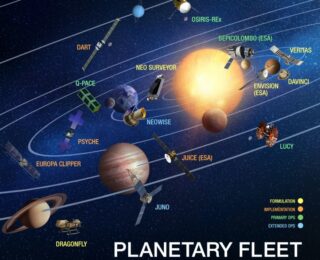
How NASA chooses its missions (and how you can help)

How NASA chooses its missions (and how you can help)

by Anthony Maue | Nov 26, 2021 | Current Events, Guides

NASA is a massive and multifaceted organization. As a graduate student, you can participate in the reviews that ultimately lead to the next big space mission.

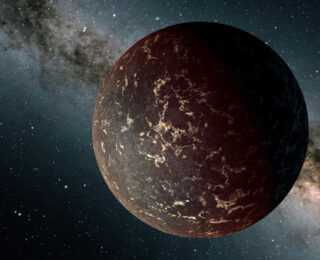
Imitation is the greatest form of flattery: Introducing massive Mercury doppelganger HD 137496 b

Imitation is the greatest form of flattery: Introducing massive Mercury doppelganger HD 137496 b

by Sasha Warren | Nov 24, 2021 | Daily Paper Summaries

You’ve heard of super-Earths and sub-Neptunes… but what about a super-Mercury?
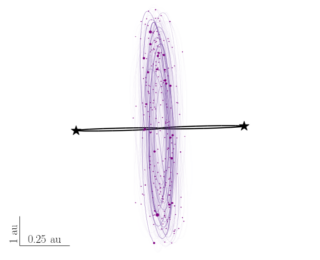
Perpendicular planets are less peculiar than you’d think

Perpendicular planets are less peculiar than you’d think

by Anthony Maue | Nov 23, 2021 | Daily Paper Summaries

Simulations of planet formation around binary stars compare coplanar vs perpendicular orbits.
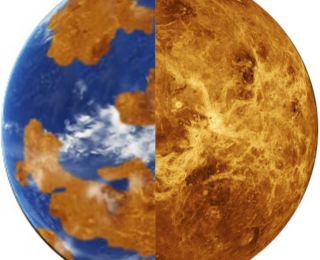
Hydrate or Die-drate: Was Venus Ever Habitable?

Hydrate or Die-drate: Was Venus Ever Habitable?

by Katya Gozman | Nov 10, 2021 | Daily Paper Summaries

Could Venus have ever boasted the expansive oceans we find on Earth today? Find out by reading today’s bite about planetary scientists that modeled Venus’s atmosphere!
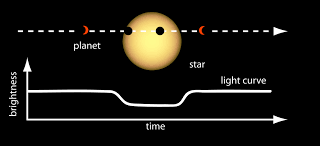
UR: Using Gaussian Processes to Study Exoplanet Transits and Stellar Variability Simultaneously

UR: Using Gaussian Processes to Study Exoplanet Transits and Stellar Variability Simultaneously

by Guest | Oct 27, 2021 | Undergraduate Research

In the latest of our #UndergradResearch series, discover how Larissa Palethorpe finds a way to get more information out of transit light curves.
The 2021 Nobel Prize in Physics

The 2021 Nobel Prize in Physics

by Briley Lewis | Oct 13, 2021 | Classics, Climate Change, Current Events

This year’s physics Nobel made a statement about one of the world’s most pressing issues: climate change. In this Bite, we’ll go into the prize-winning science behind this Nobel from Manabe and Hasselmann.

« Older Entries
Next Entries »

Loading

Follow our socials

  • Bluesky
  • Facebook
  • Instagram
  • RSS Feed

More Posts About

AAS AGN astronomy astrophysics binary stars black holes cosmology dark matter dwarf galaxies exoplanets galaxies galaxy evolution gravitational waves habitability JWST Kepler Milky Way observations planetary science planet formation protoplanetary disks radio astronomy simulations solar system spectroscopy star formation stars stellar evolution supernovae theory

Posts by Category

  • Accessibility
  • Applications
  • Beyond
  • Book Reviews
  • Career Navigation
  • Classics
  • Climate Change
  • Course Assignments
  • Crossposts
  • Current Events
  • Daily Paper Summaries
  • Game Reviews
  • Guides
  • Historical Astronomy
  • Instrumentation
  • Interviews
  • Outreach
  • Personal Experiences
  • PRJ
  • Quick Notes
  • Satellites
  • Teaching
  • Undergraduate Research

More Astronomy

  • AAS
  • AAS Nova
  • astro-ph
  • AstroBetter
  • APOD

Read Astrobites in Other Languages

  • Astrobitos (Spanish)
  • Astropontos (Portuguese)
  • staryab (Farsi)

Listen to Astrobites

  • astro[sound]bites

Discover More Incredible Science

  • ScienceBites Network
  • RSS

© 2026 Astrobites | All Rights Reserved | Supported by AAS | Designed by Elegant Themes | Powered by WordPress