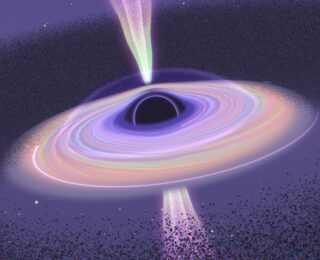
Forever Alone: A Black Hole Destined to Stay too Big
This ancient black hole is far too massive for its galaxy. Thirteen billion years later, it might still be haunting us.

This ancient black hole is far too massive for its galaxy. Thirteen billion years later, it might still be haunting us.
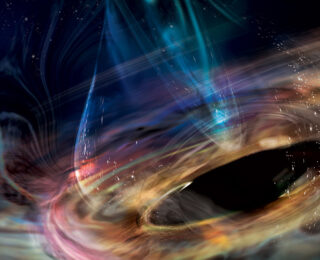
Eating matter is what black holes do best, but what happens when we find one choking on its food? The answer might surprise you!
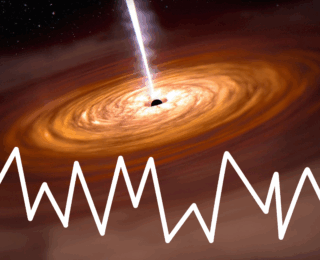
When we don’t have spectra, we can estimate the distance to a quasar by calculating its photometric redshift. Today’s authors present a new way to use the ‘flickering’ of quasars to improve these distance estimates.
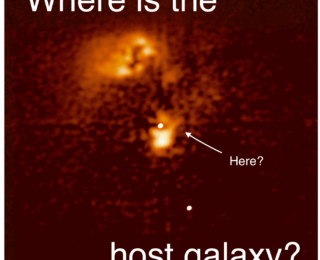
Today’s guest post presents an investigation of HE0450-2958—a quasar with a “missing” host galaxy.
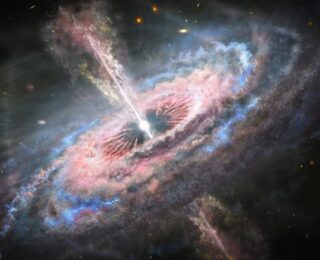
Supermassive black holes in the early universe seem to have grown too quickly in a limited amount of time. But might they have been hiding phases of growth from astronomers?
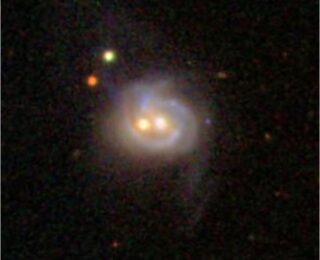
Today’s paper explores a binary quasar system that’s full of mysteries!