Feeling gassy?
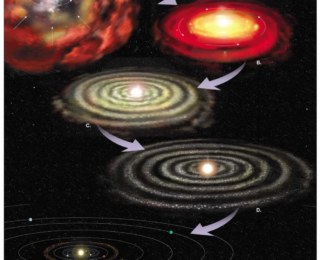
When does a planet form like a Neptune or like a Jupiter? Today’s bite explores this question!

When does a planet form like a Neptune or like a Jupiter? Today’s bite explores this question!
The circumgalactic and intergalactic media may contain the majority of baryonic matter in the universe, but their low density makes them extremely faint. Can an instrument designed to image low surface brightness objects help shed light on these ghostly structures?
Radiation from massive stars can melt away protoplanetary disks. What can the leftover disks tell us about the environment from which they formed?
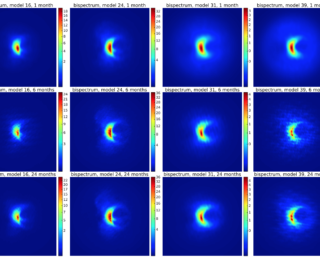
Recently, the world saw the first-ever images of a black hole’s shadow. Future images could be sharper with space-based telescopes!
A mysterious type of matter, quark-gluon plasma, may lie at the heart of neutron stars.
Can exoplanetary systems remain intact in dense stellar environments, or are their exoplanets destined to be flung into the far reaches of space? N-body simulations hint at characteristics that lead to a higher likelihood of survival.