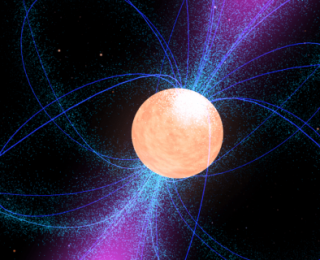
Why don’t they just break up?
Millisecond pulsars haven’t been observed to spin faster than ~700 Hz — if they don’t fly apart until ~1 kHz, why haven’t we found any faster specimens?

Millisecond pulsars haven’t been observed to spin faster than ~700 Hz — if they don’t fly apart until ~1 kHz, why haven’t we found any faster specimens?
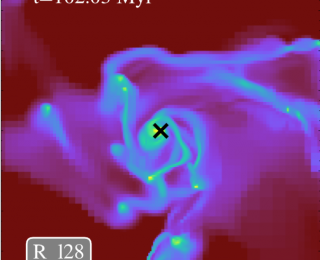
Do we really understand how black holes grow? Using new methods to run high resolution simulations, the authors of this paper investigate the evolution of gas near a supermassive black hole – and their results have serious implications for the models commonly used in cosmological simulations.
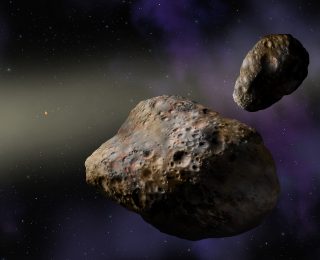
The mere existence of a binary asteroid near Jupiter can enlighten us to conditions in the early Solar System and shake up what we thought we knew about this time period!

Spectrographs here on Earth are getting good enough to detect tortoise-speed velocity shifts in starlight. That means that we need to understand the bubbling, broiling surfaces of stars to tortoise-level precision.
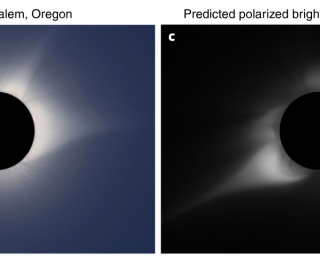
The 2017 total solar eclipse both enraptured the general American public and provided a rare opportunity to study the solar corona in detail. Today’s paper describes an attempt to predict the behavior of the solar atmosphere in advance of the eclipse, a space weather analog to terrestrial weather forecasting!
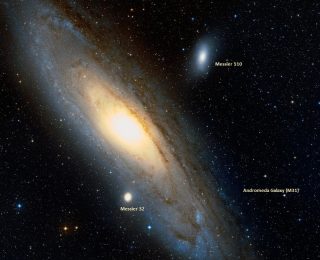
Cosmic cannibalism, or the merging of small galaxies with larger ones, happens all over the universe. We now know that the Milky Way lost a sister galaxy to Andromeda, and we’re now a step closer to understanding what might ultimately happen when Andromeda comes for us.