• RSS
  • Submit a Guest Post
  • Undergraduates: Submit your Research!
  • Suggest a Paper Topic!
astrobites
  • About
    • About Astrobites
    • Meet the Authors
    • Statement of Inclusivity
    • Copyright & Permissions
  • Latest Research
    • Daily Paper Summaries
    • Classics
    • Undergrad Research
    • Physical Review Coverage
  • Beyond astro-ph
    • Beyond astro-ph Library
    • Interviews
    • Career Navigation
    • Personal Experiences
    • Current Events
    • Teaching with Astrobites
  • Guides
    • EM Spectrum
    • Galaxies & AGNs
    • Spectroscopy and Spectral Lines
    • Adaptive Optics
    • Gravitational Waves
    • Transient Astronomy
    • Astrophysical Software
    • Graduate School
    • Writing a personal statement for grad apps
    • First Observing Run
    • …More Guides!
Select Page
Age is Just a Number: Radioactive Dating in Stars

Age is Just a Number: Radioactive Dating in Stars

by Mark Popinchalk | Feb 21, 2023 | Daily Paper Summaries

Do you feel older? How does it show in your body? Stars carry their own clocks within them too. See how we can better measure their Uranium as it slowly ticks away.
Asymmetries are red, violets are blue, superflares are seen in white light, and H-alpha too!

Asymmetries are red, violets are blue, superflares are seen in white light, and H-alpha too!

by Ivey Davis | Feb 14, 2023 | Daily Paper Summaries

We don’t fully understand the emission processes in stellar flares. These authors try to get to the heart of the problem with multi-instrument observations.
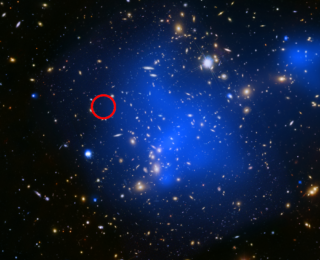
Meet the great-great-grandparents of galaxy clusters

Meet the great-great-grandparents of galaxy clusters

by Roan Haggar | Dec 17, 2022 | Daily Paper Summaries

JWST has found the oldest galaxy cluster ever, and studying it might give us some clues about the history of modern-day clusters.
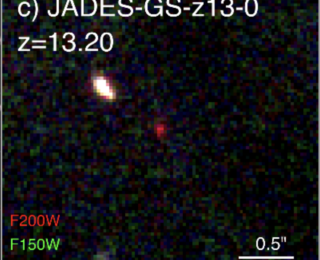
JWST smashes the record for the earliest galaxy

JWST smashes the record for the earliest galaxy

by Zili Shen | Dec 16, 2022 | Daily Paper Summaries

JWST breaks the record for the earliest galaxy as scientists confirm a galaxy formed in the first 400 million years of the Universe.
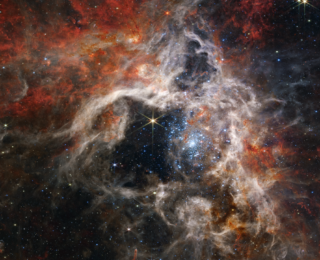
Whizzing and Whirling Stars in the Tarantula’s Web

Whizzing and Whirling Stars in the Tarantula’s Web

by Katya Gozman | Dec 15, 2022 | Daily Paper Summaries

Some stars are speedier than their siblings: read on to learn about the different populations of runaway stars in the Tarantula Nebula!

A Smoggy Day on a Young Exoplanet

A Smoggy Day on a Young Exoplanet

by Yoni Brande | Dec 2, 2022 | Current Events, Daily Paper Summaries

Transmission spectroscopy shows /
no gases or features, although /
whether sunspots or hazes /
or both (how in blazes?) /
this atmosphere’s spectrum is sloped!

« Older Entries
Next Entries »

Loading

Follow our socials

  • Bluesky
  • Facebook
  • Instagram
  • RSS Feed

More Posts About

AAS AGN astronomy astrophysics binary stars black holes cosmology dark matter dwarf galaxies exoplanets galaxies galaxy evolution gravitational waves habitability JWST Kepler Milky Way observations planetary science planet formation protoplanetary disks radio astronomy simulations solar system spectroscopy star formation stars stellar evolution supernovae theory

Posts by Category

  • Accessibility
  • Applications
  • Beyond
  • Book Reviews
  • Career Navigation
  • Classics
  • Climate Change
  • Course Assignments
  • Crossposts
  • Current Events
  • Daily Paper Summaries
  • Game Reviews
  • Guides
  • Historical Astronomy
  • Instrumentation
  • Interviews
  • Outreach
  • Personal Experiences
  • PRJ
  • Quick Notes
  • Satellites
  • Teaching
  • Undergraduate Research

More Astronomy

  • AAS
  • AAS Nova
  • astro-ph
  • AstroBetter
  • APOD

Read Astrobites in Other Languages

  • Astrobitos (Spanish)
  • Astropontos (Portuguese)
  • staryab (Farsi)

Listen to Astrobites

  • astro[sound]bites

Discover More Incredible Science

  • ScienceBites Network
  • RSS

© 2026 Astrobites | All Rights Reserved | Supported by AAS | Designed by Elegant Themes | Powered by WordPress