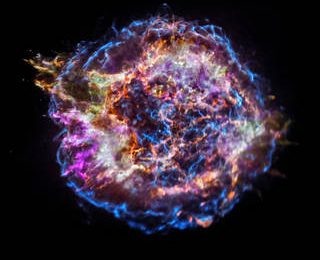
Mixing up a Batch of Stars
We can learn a lot about the history of the universe from the stars we see in the night sky today. In today’s astrobite, we look at the history that certain carbon-enhanced, metal-poor stars might be trying to tell.

We can learn a lot about the history of the universe from the stars we see in the night sky today. In today’s astrobite, we look at the history that certain carbon-enhanced, metal-poor stars might be trying to tell.

A series of papers between two research groups, investigating the nature of an unusual distant galaxy.
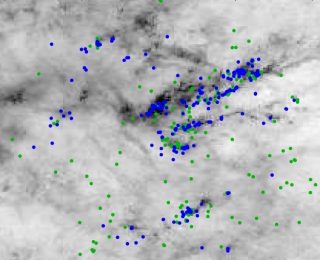
Taurus-Auriga is the nearest large star-forming region, but its stellar membership roster is still incomplete. In today’s bite we’ll see if there are older members among the newbies.
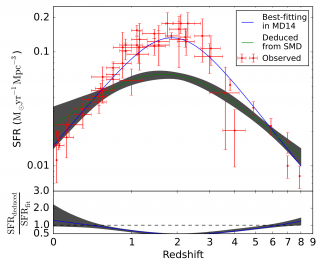
Observations of galaxies in the early universe reveal too much star formation to account for the number of stars around today. What gives? Today’s ‘bite investigates.
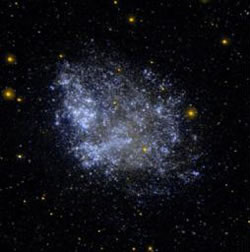
What can the smallest galaxies in the local Universe tell us about reionization?
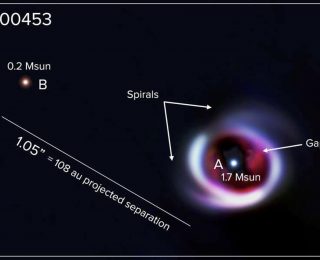
Using 14 years of high resolution near-infrared imaging, radio observations of molecular gas, and a hydrodynamic simulation the authors show that spiral arms seen in the protoplanetary disk around HD 100453 A are caused by its M-dwarf companion.