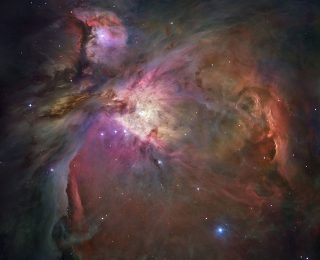
So what does a molecular cloud produce, anyway?
The proportions of stars at different masses is an important, but challenging, quantity to measure. In this paper we take a look at a nearby stellar birthing region to snare a representative sample.

The proportions of stars at different masses is an important, but challenging, quantity to measure. In this paper we take a look at a nearby stellar birthing region to snare a representative sample.

“Stars are the atoms of the universe,” according to Prof. Chris McKee, who studies the formation of these important cosmic building blocks.
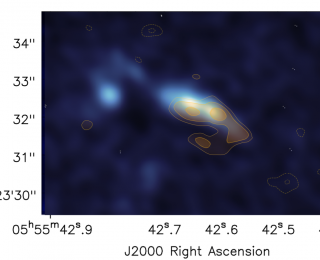
This little galaxy is churning out the ingredients necessary for planets and life at a frantic pace. New observations reveal the sharpest view yet of this cycle of gas and stardust.
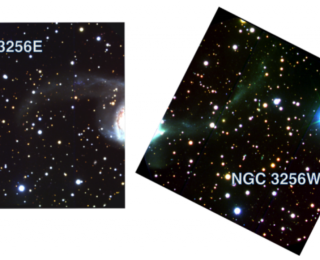
Merging or interacting galaxies can form streams of gas and new star formation called tidal tails. Today’s paper explores the possibility that older stars from the original galaxies may also be pulled along into these streams.
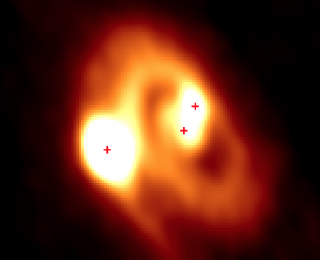
About half of all Sun-like stars have siblings, born into binary or multiple star families. Today’s paper presents the first observations of an important process in forming such systems – stars spawned from gravitational instability in a protostellar disk.
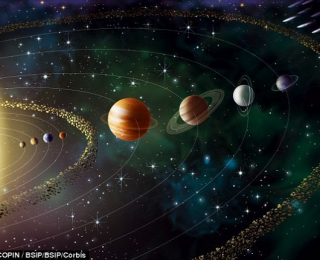
The puzzling architecture of the Solar system has long been a headache for planetary dynamicists. An alternative model of the gas giants’ movements may shed new light on the issue.