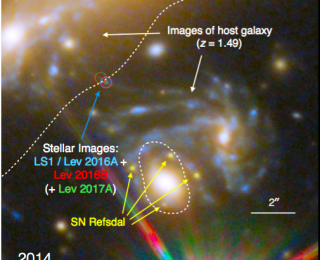
The Farthest Star Ever Seen
So far, Gravitational Lensing has allowed us to observe distant faint galaxies or supernovae. Its time to observe individual stars now.

So far, Gravitational Lensing has allowed us to observe distant faint galaxies or supernovae. Its time to observe individual stars now.
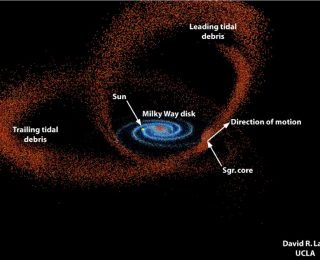
Observations of stars today can reveal billions of years of history.
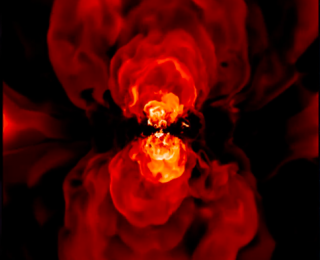
It turns out that supernovae, much like beans, are a magical fruit that can make galaxies release an outflow of gas. Also, simulations are complicated.
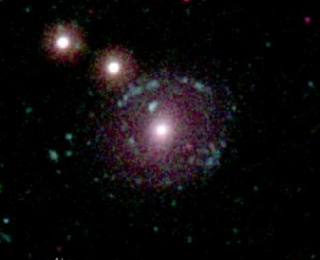
Early-type galaxies are famous for *not* forming stars. But are they as inactive as they appear, or is there life in the old galaxy yet?
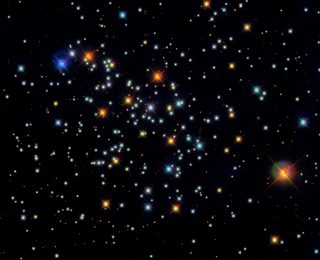
Abundance analysis, or chemical tagging, is widely use to identify stars with a common birth. But is a similar abundance alone enough to identify siblings? Can’t stars have doppelgangers?
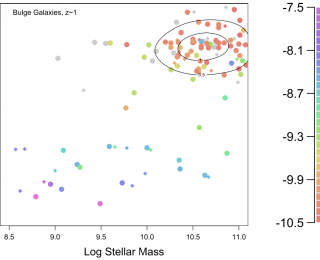
…or are they? The color-mass diagram for galaxies can tell us a lot about galaxy evolution, and today’s paper reports what this diagram looks like at high redshifts.