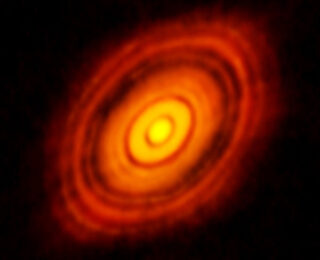
Movement in the Dust: Detecting Planetary Candidates via Disk Kinematics?
In today’s paper, the authors analyze millimeter and submillimeter ALMA observations of a protoplanetary disk, and find kinematic signs of candidate companions within!

In today’s paper, the authors analyze millimeter and submillimeter ALMA observations of a protoplanetary disk, and find kinematic signs of candidate companions within!
As part of our #BlackInAstro series celebrating Black History Month, we interview Dr. Chris Moore @CMooreSpace, a research associate at the Harvard-Smithsonian Center for Astrophysics!
Do you feel older? How does it show in your body? Stars carry their own clocks within them too. See how we can better measure their Uranium as it slowly ticks away.
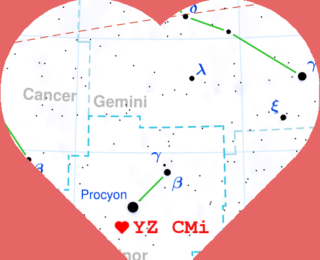
We don’t fully understand the emission processes in stellar flares. These authors try to get to the heart of the problem with multi-instrument observations.
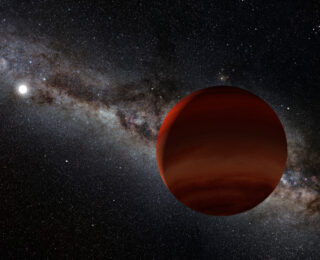
Today’s post discusses the discovery of an unusual system: an ultra-cool brown dwarf orbiting a white dwarf!
For the past decade, ESA’s Gaia mission has helped reshape astronomy in more ways than you can probably think of. You can hear more about Gaia in Prof. Anthony Brown’s plenary talk at #AAS241!