by Leonardo dos Santos | Apr 30, 2017 | Daily Paper Summaries
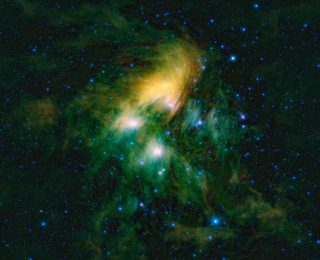
Have you checked the assumptions and approximations of your favorite stellar evolution code? In today’s paper we confront these uncertainties and face the fact that, well, stellar evolution is extremely complicated and we need to keep tabs of the limitations of our models.
by Kerrin Hensley | Jan 23, 2017 | Daily Paper Summaries
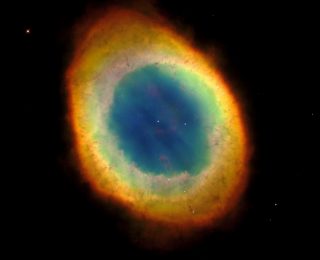
Planetary nebulae where they shouldn’t be–how did they get there?
by Ingrid Pelisoli | Nov 21, 2016 | Daily Paper Summaries
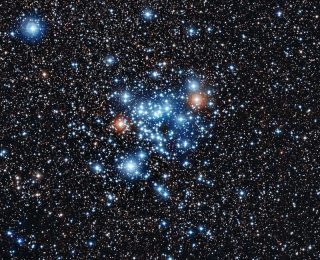
There’s an unexpected population of blue stars identified in clusters, known as blue stragglers. They should have evolved off the main sequence, but some rejuvenating process is in action, keeping them there longer than expected. Their origin and evolution is not fully understood. Today’s paper tackles these two issues, identifying some possible answers as to where these blue straggler stars come from and where they are going.
Image credits: ESA/Hubble
by Mara Johnson-Groh | Sep 6, 2016 | Daily Paper Summaries
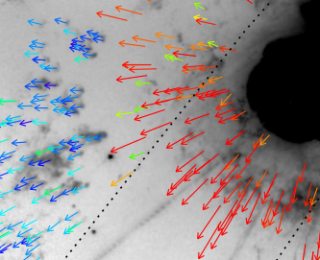
There she blows! A detective case tracking the motion of material ejected from a star to figure out when the star exploded.
by Caroline Huang | Jul 21, 2016 | Daily Paper Summaries
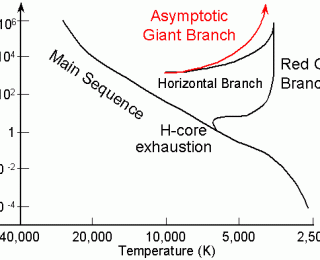
By the time a star becomes a white dwarf, much of its mass will have been lost. When does this mass loss occur and what drives it? Read today’s astrobite to find out.
by Matthew Green | Jul 6, 2016 | Daily Paper Summaries
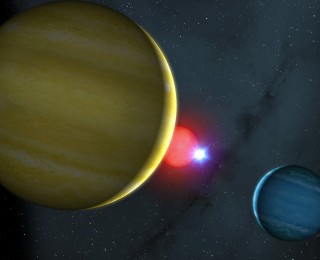
NN Serpentis has everything: a white dwarf + main sequence binary system that is believed to contain two planets and, now, a disc of debris.
