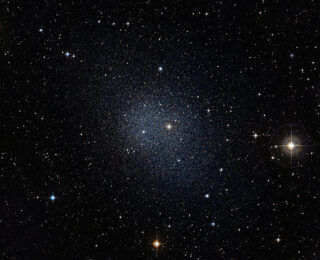
Smashing Neutrons: On the Origin of Extreme r-process Enhanced Stars
Heavy elements require extreme conditions to be produced. Today’s bite explores three unique stars that may give us additional clues on how that happens.

Heavy elements require extreme conditions to be produced. Today’s bite explores three unique stars that may give us additional clues on how that happens.
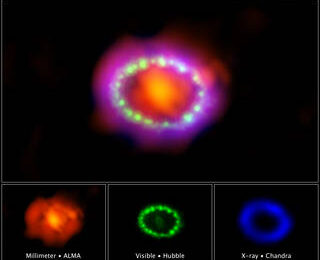
After more than 30 years, have astronomers finally discovered what the compact object at the center of Supernova 1987A is?
Thanks to astronomical surveys, we now know our night sky is constantly alight with variable objects. Tune in to Prof. Christopher Kochanek’s Dannie Heineman Prize talk at #AAS237 to learn about how small telescopes can change the way we observe our rapidly changing universe!
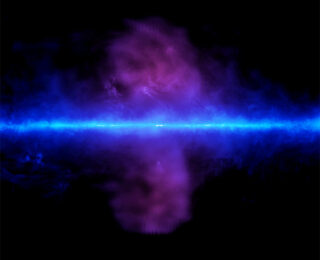
Massive stars live fast and die young, making metals along the way.
All stars die, but not all stars die the same. Some will explode and leave no trace behind. These special explosions with no trace are called pair-instability supernovae (PISNe) and only happen in the most massive of stars. Today’s paper from 2009 investigates a unique supernova, SN 2007bi, that was initially thought to be the first PISN ever observed.
Aluminum can be used for so much more than foil. What can it tell us about our solar system’s place in the galaxy? Read about today’s paper to find out more.