• RSS
  • Submit a Guest Post
  • Undergraduates: Submit your Research!
  • Suggest a Paper Topic!
astrobites
  • About
    • About Astrobites
    • Meet the Authors
    • Statement of Inclusivity
    • Copyright & Permissions
  • Latest Research
    • Daily Paper Summaries
    • Classics
    • Undergrad Research
    • Physical Review Coverage
  • Beyond astro-ph
    • Beyond astro-ph Library
    • Interviews
    • Career Navigation
    • Personal Experiences
    • Current Events
    • Teaching with Astrobites
  • Guides
    • EM Spectrum
    • Galaxies & AGNs
    • Spectroscopy and Spectral Lines
    • Adaptive Optics
    • Gravitational Waves
    • Transient Astronomy
    • Astrophysical Software
    • Graduate School
    • Writing a personal statement for grad apps
    • First Observing Run
    • …More Guides!
Select Page
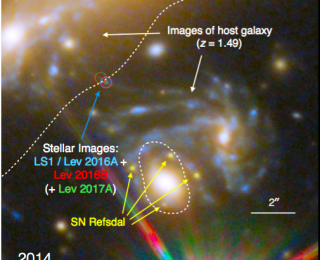
The Farthest Star Ever Seen

The Farthest Star Ever Seen

by Gourav Khullar | Jul 4, 2017 | Daily Paper Summaries

So far, Gravitational Lensing has allowed us to observe distant faint galaxies or supernovae. Its time to observe individual stars now.

Meet the AAS Keynote Speakers: Douglas Leonard

Meet the AAS Keynote Speakers: Douglas Leonard

by Gourav Khullar | May 31, 2017 | Current Events, Personal Experiences

Learn more about AAS plenary speakers and their research!
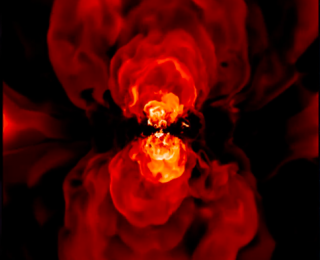
Breaking Wind: Supernova feedback in galaxies

Breaking Wind: Supernova feedback in galaxies

by Mia de los Reyes | Apr 12, 2017 | Daily Paper Summaries

It turns out that supernovae, much like beans, are a magical fruit that can make galaxies release an outflow of gas. Also, simulations are complicated.
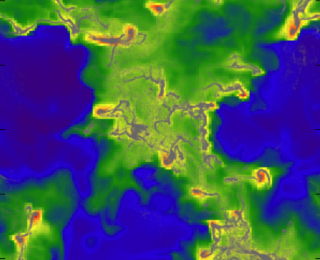
The Life Cycles of Dust Grains

The Life Cycles of Dust Grains

by Benny Tsang | Mar 27, 2017 | Daily Paper Summaries

Dust grains play an important in many facets of astrophysics. See how their lives are revealed in realistic simulations for the first time!
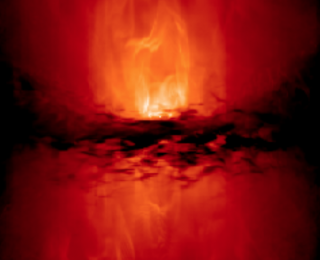
Making of an Active Galactic Nucleus

Making of an Active Galactic Nucleus

by Benny Tsang | Sep 5, 2016 | Daily Paper Summaries

In light of new observations, the traditional dusty-torus picture of active galactic nuclei may need revision.
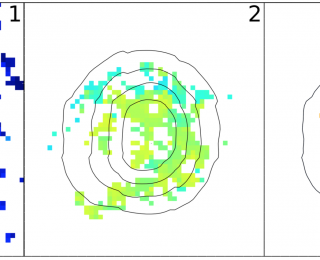
A Trio of Supernova Fossils

A Trio of Supernova Fossils

by Jesse Feddersen | Jun 11, 2016 | Daily Paper Summaries

In the Triangulum Galaxy, over the course of a hundred thousand years, three supernova exploded from the same star cluster. The remains of these explosions have expanded into a trio of giant bubbles nested within each other.

« Older Entries
Next Entries »

Loading

Follow our socials

  • Bluesky
  • Facebook
  • Instagram
  • RSS Feed

More Posts About

AAS AGN astronomy astrophysics binary stars black holes cosmology dark matter dwarf galaxies exoplanets galaxies galaxy evolution gravitational waves habitability JWST Kepler Milky Way observations planetary science planet formation protoplanetary disks radio astronomy simulations solar system spectroscopy star formation stars stellar evolution supernovae theory

Posts by Category

  • Accessibility
  • Applications
  • Beyond
  • Book Reviews
  • Career Navigation
  • Classics
  • Climate Change
  • Course Assignments
  • Crossposts
  • Current Events
  • Daily Paper Summaries
  • Game Reviews
  • Guides
  • Historical Astronomy
  • Instrumentation
  • Interviews
  • Outreach
  • Personal Experiences
  • PRJ
  • Quick Notes
  • Satellites
  • Teaching
  • Undergraduate Research

More Astronomy

  • AAS
  • AAS Nova
  • astro-ph
  • AstroBetter
  • APOD

Read Astrobites in Other Languages

  • Astrobitos (Spanish)
  • Astropontos (Portuguese)
  • staryab (Farsi)

Listen to Astrobites

  • astro[sound]bites

Discover More Incredible Science

  • ScienceBites Network
  • RSS

© 2026 Astrobites | All Rights Reserved | Supported by AAS | Designed by Elegant Themes | Powered by WordPress