by Elizabeth Lovegrove | Mar 18, 2013 | Daily Paper Summaries
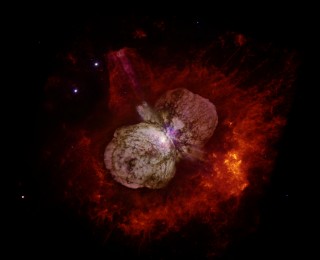
When the supernova impostor SN2009ip brightened to a V-band absolute magnitude of -17.7 near the end of 2012, the outburst was classified as a Type IIn supernova and many observers thought the star had finally exploded for good. In this paper, however, the authors present several months of multiband imaging of transient 2012b and argue that the low limit on the nickel mass and lack of most heavy elements in the ejecta suggest the progenitor is still around, and that transient 2012b was produced instead by the collision of two massive shells, possibly ejected by the pulsational pair instability.
by Jessica Donaldson | Mar 17, 2013 | Daily Paper Summaries
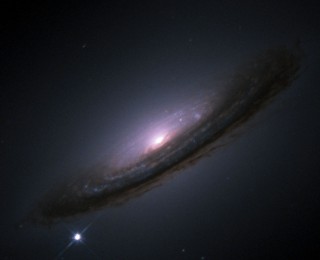
Type Ia Supernovae are extensively used in astronomy research, but the progenitors of these massive explosions are still not well understood. This paper discusses new evidence that there are two distinct populations of type Ia supernovae, and that they originate from different stellar populations.
by Betsy Mills | Mar 16, 2013 | Daily Paper Summaries
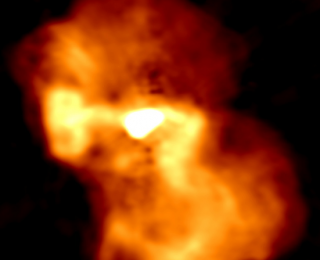
Check out these cool new results from LOFAR which is boldly going to some of the longest wavelengths astronomers have ever observed! An active galaxy has a less active past than we might expect, pulsating neutron stars are behaving strangely, and even at wavelengths as long as meters, there are still spectral lines from extremely low-energy atomic transitions.
by Betsy Mills | Feb 20, 2013 | Daily Paper Summaries
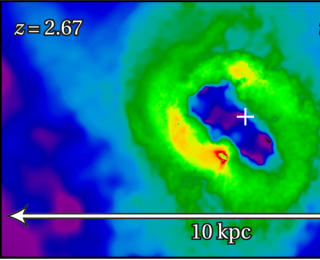
What were astronomers reading and talking about in their research last year? Check out figures from the top 12 most-cited astronomy papers from 2012 (so far) and find out what researchers were up to and why!
by Alice Olmstead | Feb 19, 2013 | Daily Paper Summaries
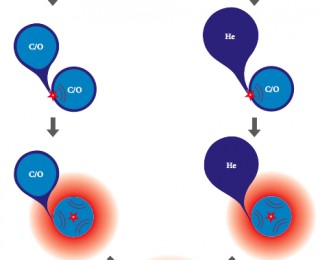
Pakmor et al. propose a new mechanism to make Type 1a supernova explosions from a pair of white dwarfs.
by Maria Drout | Feb 12, 2013 | Daily Paper Summaries
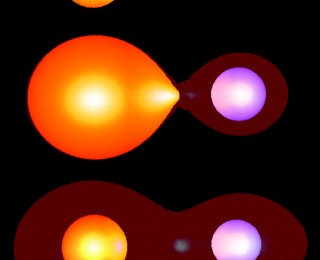
Scientists propose way in which we could observe the envelope being ejected from binaries going through a common envelope phase. And their predictions match a class of objects which have already been observed.
