by Elizabeth Lovegrove | Oct 23, 2012 | Daily Paper Summaries
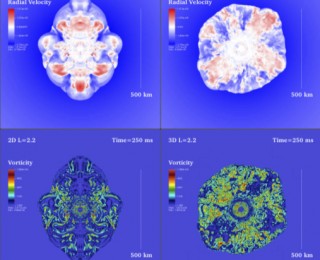
The neutrino reheating mechanism works out in theory to trigger core-collapse supernovae, but we’ve had a lot of trouble getting it to work in 3-dimensional simulations. Because of the prohibitive computational expense, really accurate neutrino physics have thus far only been implemented in 2D. This paper seeks to investigate whether there are systematic differences in fluid behavior between 2D and 3D models in order to figure out whether a 2D model can really stand in for a 3D one.
by Maria Drout | Aug 20, 2012 | Daily Paper Summaries
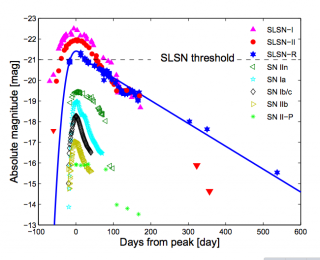
Super-luminous supernovae are a recently discovered rare class of stellar explosions with luminosities 10 – 100 times higher than normal supernovae. We summarize what is known about how these events are powered.
by Maria Drout | Jul 23, 2012 | Daily Paper Summaries
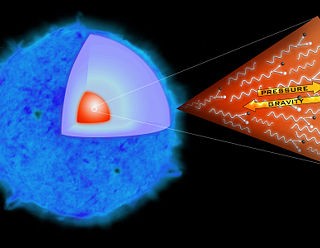
Scientists search for signatures of pair-instability supernovae in thousands of Sloan Digital Sky Survey Stars.
by Shannon Hall | May 27, 2012 | Daily Paper Summaries
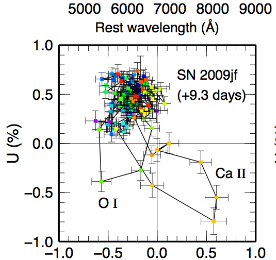
Recent research suggests that Supernovae are aspherical, but the question remains: is this asymmetry merely incidental or is it a vital clue to the explosion mechanism behind SNe? By observing stripped-envelope SNe (i.e. SNe without a H-rich layer) we may see deeper into the heart of the exploding star. Using spectropolarimetry we are able to note that these SNe are in fact aspherical, which may be the cause of the explosion mechanism itself.
by Justin Vasel | May 24, 2012 | Daily Paper Summaries
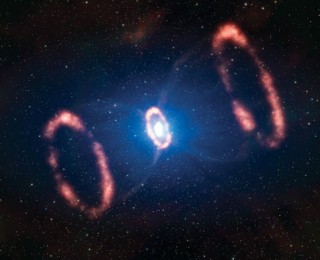
The SuperNova Early Warning System (SNEWS) uses neutrino detectors across the globe to predict when a supernova is about to become visible, providing astronomers the unprecedented opportunity to study the next supernova as it happens.
by Anna Rosen | Apr 24, 2012 | Daily Paper Summaries
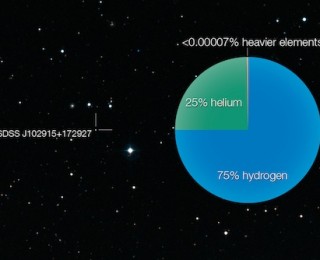
The low-mass primitive halo star, SDSS J102915+172927, puzzled astronomers because of it’s extremely low metal content. This article aims to answer under what physical conditions can a star like this form.
