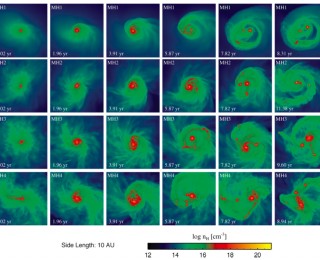
by Alice Olmstead | Sep 25, 2012 | Daily Paper Summaries
In a recent paper, Stacy et al. reveal the detailed internal structure of the seeds of four of the first stars, and demonstrate for the first time that they are rapidly spinning throughout. Their results bring us one step closer to a coherent story of the lives and deaths of Population III stars.
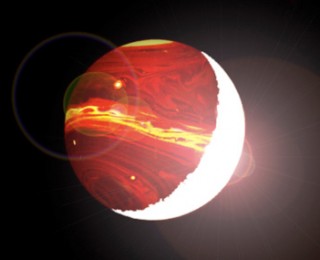
by Caroline Morley | Sep 21, 2012 | Daily Paper Summaries
Astronomers have started trying to understand how to organize classes of exoplanets based on their physical characteristics. As it has turned out over the last ten years, exoplanets are considerably more complicated to classify than stars. The evolution of star is based (almost) exclusively on how massive it is at birth. Instead, this paper classifies hot exoplanets by their level of irradiation from their host star and their chemical composition.
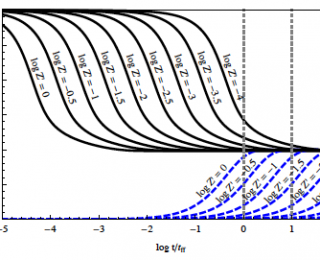
by Chris Faesi | Sep 2, 2012 | Daily Paper Summaries
Stars forming in atomic gas?? Maybe so, if the metallicity is low!
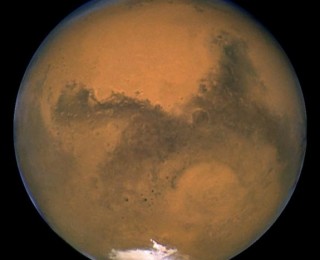
by Caroline Morley | May 31, 2012 | Daily Paper Summaries
Mars is observed to have sedimentary rocks, which provide proof that liquid water once existed on the Martian surface. However, the surface of Mars would have been too cold to have permanent rivers and lakes; the authors of this paper suggest seasonal snowmelt could create enough liquid water to form these rocks.
by Caroline Morley | May 3, 2012 | Daily Paper Summaries
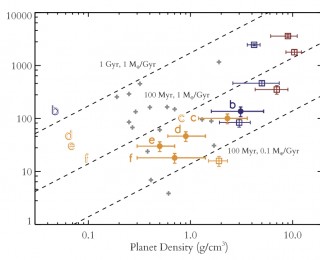
To characterize the newly-discovered population of small planets, this team from UC Santa Cruz investigated how planets lose mass over their lifetimes, and determined how this loss will affect planet populations. This paper suggests that we can understand the population of small planets using mass loss models, and we make predictions using these models for the masses of irradiated super-Earths.
by Susanna Kohler | Mar 9, 2012 | Daily Paper Summaries
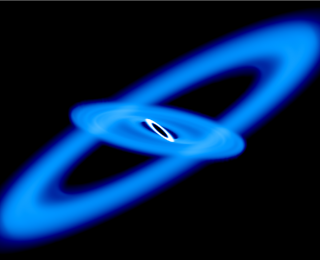
How fast can you grow a supermassive black hole by accretion? That depends on how much you tilt the disk…
