by Betsy Mills | Jul 13, 2013 | Daily Paper Summaries
The authors of today’s paper investigate the feeding habits of the elusive quiescent supermassive black hole, finding that in addition to swallowing some stars whole and constantly snacking on the winds of other stars, some black holes may also dine on giant stars slowly disrupted over tens to hundreds of orbits.

by Nick Ballering | Jun 17, 2013 | Current Events
Highlights from the International Astronomical Union Symposium on “Exploring the Formation and Evolution of Planetary Systems”.
by Nick Ballering | Apr 23, 2013 | Daily Paper Summaries
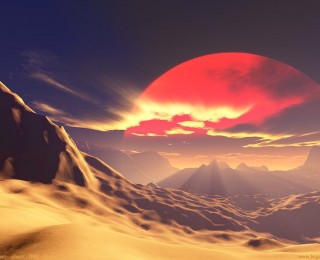
Detailed atmospheric models reveal that planets can be habitable much closer to their host star than previously thought, provided they have desert-like climates. This expanded definition of the habitable zone increases the number of planets that could support life by a factor of 2-3.
by Sukrit Ranjan | Feb 23, 2013 | Daily Paper Summaries
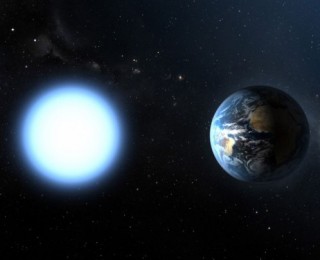
This article considers the fate of planets that orbit stars that will become white dwarfs. Can they survive? Could they be habitable?
by Caroline Morley | Jan 17, 2013 | Daily Paper Summaries
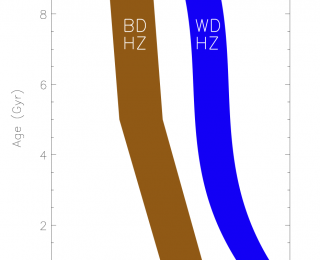
The holy grail for exoplanet science would be to find an inhabited planet. Not just habitable, but actually inhabited. But where are we most likely to find those planets? Only around Sun-like stars, or could life thrive around other types of stars? Could evolved stars like white dwarfs or neutron stars harbor life? Could brown dwarfs, the so-called failed stars, have inhabited planets?
by Courtney Dressing | Dec 20, 2012 | Daily Paper Summaries
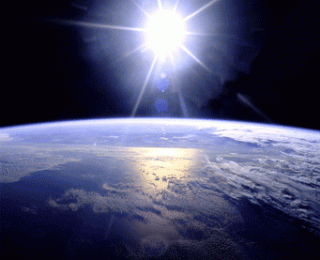
How would the spectrum of the Earth change if our planet orbited a hotter or cooler star? Would alien astronomers still be able to detect signs of life?
