• RSS
  • Submit a Guest Post
  • Undergraduates: Submit your Research!
  • Suggest a Paper Topic!
astrobites
  • About
    • About Astrobites
    • Meet the Authors
    • Statement of Inclusivity
    • Copyright & Permissions
  • Latest Research
    • Daily Paper Summaries
    • Classics
    • Undergrad Research
    • Physical Review Coverage
  • Beyond astro-ph
    • Beyond astro-ph Library
    • Interviews
    • Career Navigation
    • Personal Experiences
    • Current Events
    • Teaching with Astrobites
  • Guides
    • EM Spectrum
    • Galaxies & AGNs
    • Spectroscopy and Spectral Lines
    • Adaptive Optics
    • Gravitational Waves
    • Transient Astronomy
    • Astrophysical Software
    • Graduate School
    • Writing a personal statement for grad apps
    • First Observing Run
    • …More Guides!
Select Page

A New Way to Die: What Happens to Supermassive Stars?

by Andrew Emerick | Mar 21, 2014 | Daily Paper Summaries

Supermassive black holes are everywhere in our Universe, but we don’t know where they came from. Supermassive stars could have given birth to these massive objects. However, that is not all these fifty to one hundred solar mass stars could be responsible for…
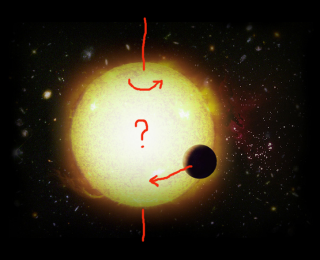
Flipping Orbits

Flipping Orbits

by Brett Deaton | Dec 18, 2013 | Daily Paper Summaries

How do so many hot jupiters come to orbit backwards?
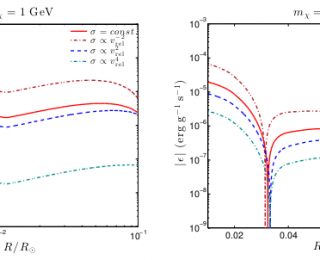
Dark matter and the Solar Interior

Dark matter and the Solar Interior

by Anson Lam | Nov 25, 2013 | Daily Paper Summaries

Depending on how they scatter with nuclei, dark matter particles might affect the structure and evolution of our Sun.
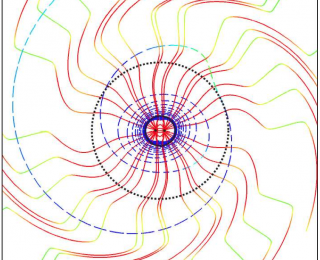
Pictures of Gravity

Pictures of Gravity

by Brett Deaton | Nov 20, 2013 | Daily Paper Summaries

Field lines are a powerful tool for building intuition for a complex geometric object.
How Did Tatooine Form?

How Did Tatooine Form?

by Nick Ballering | Oct 7, 2013 | Daily Paper Summaries

Dust traps may be the key to forming Kepler-16b and other circumbinary planets.
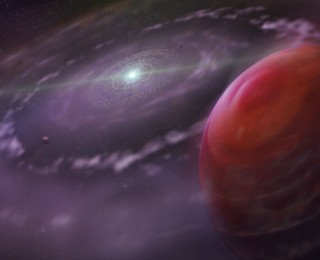
A Core Matter

A Core Matter

by Nick Ballering | Jul 15, 2013 | Daily Paper Summaries

The mass of the cores of giant planets affects their luminosity after formation, complicating how we determine the mass of directly imaged planets.

« Older Entries
Next Entries »

Loading

Follow our socials

  • Bluesky
  • Facebook
  • Instagram
  • RSS Feed

More Posts About

AAS AGN astronomy astrophysics binary stars black holes cosmology dark matter dwarf galaxies exoplanets galaxies galaxy evolution gravitational waves habitability JWST Kepler Milky Way observations planetary science planet formation protoplanetary disks radio astronomy simulations solar system spectroscopy star formation stars stellar evolution supernovae theory

Posts by Category

  • Accessibility
  • Applications
  • Beyond
  • Book Reviews
  • Career Navigation
  • Classics
  • Climate Change
  • Course Assignments
  • Crossposts
  • Current Events
  • Daily Paper Summaries
  • Game Reviews
  • Guides
  • Historical Astronomy
  • Instrumentation
  • Interviews
  • Outreach
  • Personal Experiences
  • PRJ
  • Quick Notes
  • Satellites
  • Teaching
  • Undergraduate Research

More Astronomy

  • AAS
  • AAS Nova
  • astro-ph
  • AstroBetter
  • APOD

Read Astrobites in Other Languages

  • Astrobitos (Spanish)
  • Astropontos (Portuguese)
  • staryab (Farsi)

Listen to Astrobites

  • astro[sound]bites

Discover More Incredible Science

  • ScienceBites Network
  • RSS

© 2026 Astrobites | All Rights Reserved | Supported by AAS | Designed by Elegant Themes | Powered by WordPress