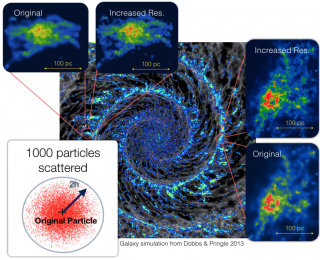
by Chris Faesi | Oct 7, 2014 | Daily Paper Summaries
Spherical cows have a long and storied history in physics, but does this type of crude approximation lead to realistic conclusions in the case of star formation? The combination of large- and small- scale simulations tests this idea.
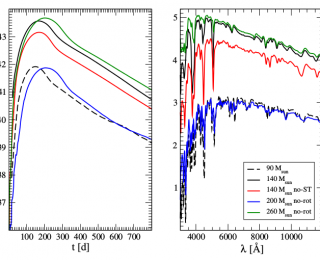
by Anson Lam | Oct 6, 2014 | Daily Paper Summaries
How does a massive star’s rotation affect the properties of its eventual explosion?
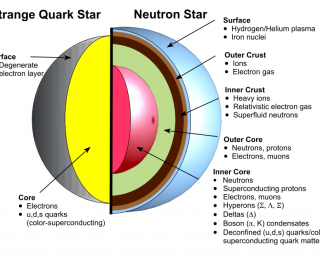
by Anson Lam | Aug 11, 2014 | Daily Paper Summaries
Neutron stars can provide insights into extreme and exotic states of matter.
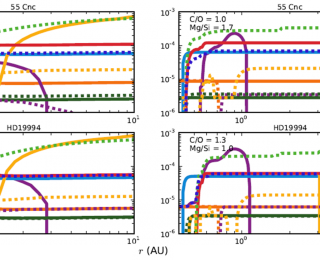
by Nick Ballering | May 26, 2014 | Daily Paper Summaries
A new model simulates the composition of growing planetesimals in an evolving protoplanetary disk. The model predicts that carbon-rich terrestrial planets can form more easily than previously thought.
by Brett Deaton | May 14, 2014 | Daily Paper Summaries
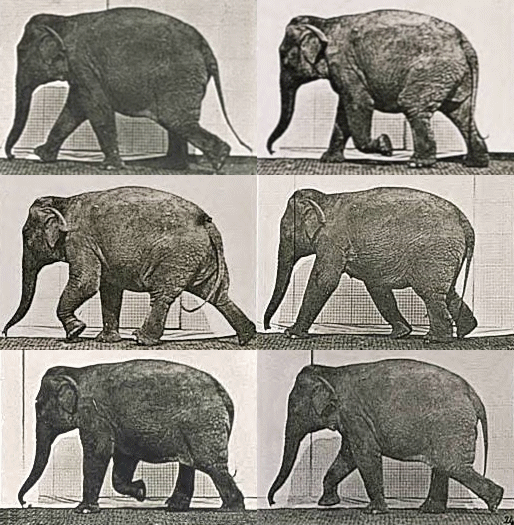
In this short critical essay, a computational astrophysicist, Kevin Heng, questions the movement of his field toward more complex models producing larger volumes of data. Toward the end of his essay, Heng poses some open questions to the simulation community. “Is scientific truth more robustly represented by the simplest, or the most complex model?”, and, “How may we judge when a simulation has successfully approximated reality in some way?”
by Chris Faesi | Apr 1, 2014 | Classics, Current Events, Daily Paper Summaries
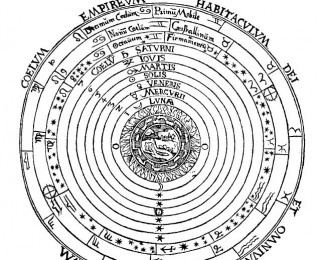
Why resort to complicated theories that involve mysterious, unknown forces and states of matter? The geocentric model of the Universe nicely explains 1st century C.E. data.
