• RSS
  • Submit a Guest Post
  • Undergraduates: Submit your Research!
  • Suggest a Paper Topic!
astrobites
  • About
    • About Astrobites
    • Meet the Authors
    • Statement of Inclusivity
    • Copyright & Permissions
  • Latest Research
    • Daily Paper Summaries
    • Classics
    • Undergrad Research
    • Physical Review Coverage
  • Beyond astro-ph
    • Beyond astro-ph Library
    • Interviews
    • Career Navigation
    • Personal Experiences
    • Current Events
    • Teaching with Astrobites
  • Guides
    • EM Spectrum
    • Galaxies & AGNs
    • Spectroscopy and Spectral Lines
    • Adaptive Optics
    • Gravitational Waves
    • Transient Astronomy
    • Astrophysical Software
    • Graduate School
    • Writing a personal statement for grad apps
    • First Observing Run
    • …More Guides!
Select Page
Peas in a Pod?

Peas in a Pod?

by Spencer Wallace | Jul 15, 2019 | Daily Paper Summaries

Neighboring exoplanets appear to come in similar sizes. But is this a result of observational bias?

The future is bright: a new technique finds variability in K2 data of the Seven Sisters

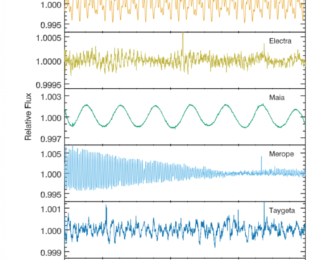
The future is bright: a new technique finds variability in K2 data of the Seven Sisters

by Oliver Hall | Feb 15, 2019 | Daily Paper Summaries

Today’s authors use a new technique to make new discoveries about the Seven Sisters.

Reading the Epic of Reionization

by Caitlin Doughty | Feb 7, 2019 | Daily Paper Summaries

Observations of dim galaxies lensed by foreground clusters provides a way of measuring the progression of reionization.
It’s a bird, it’s a planet, it’s a … speckle?

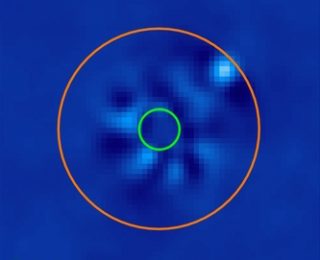
It’s a bird, it’s a planet, it’s a … speckle?

by Eckhart Spalding | Oct 18, 2018 | Daily Paper Summaries

Well, let’s have a drink and see if that helps us figure things out.
Predicting the number of planets from TESS

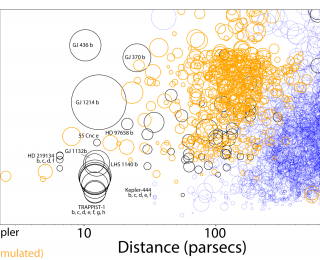
Predicting the number of planets from TESS

by Emma Foxell | Apr 24, 2018 | Daily Paper Summaries

NASA’s TESS spacecraft has launched! Today’s paper predicts how many exoplanets it will find.
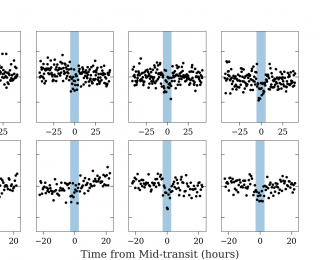
Statistically Confirming an Earth-Like Planet? Not So Fast!

Statistically Confirming an Earth-Like Planet? Not So Fast!

by Samuel Factor | Apr 6, 2018 | Daily Paper Summaries

Statistical confirmation of long-period, low SNR candidates should be taken with a grain of salt. The reliability is too low to confirm individual systems without followup observations and the 99% confidence validation of Kepler-452b is likely closer to 90%.

« Older Entries
Next Entries »

Loading

Follow our socials

  • Bluesky
  • Facebook
  • Instagram
  • RSS Feed

More Posts About

AAS AGN astronomy astrophysics binary stars black holes cosmology dark matter dwarf galaxies exoplanets galaxies galaxy evolution gravitational waves habitability JWST Kepler Milky Way observations planetary science planet formation protoplanetary disks radio astronomy simulations solar system spectroscopy star formation stars stellar evolution supernovae theory

Posts by Category

  • Accessibility
  • Applications
  • Beyond
  • Book Reviews
  • Career Navigation
  • Classics
  • Climate Change
  • Course Assignments
  • Crossposts
  • Current Events
  • Daily Paper Summaries
  • Game Reviews
  • Guides
  • Historical Astronomy
  • Instrumentation
  • Interviews
  • Outreach
  • Personal Experiences
  • PRJ
  • Quick Notes
  • Satellites
  • Teaching
  • Undergraduate Research

More Astronomy

  • AAS
  • AAS Nova
  • astro-ph
  • AstroBetter
  • APOD

Read Astrobites in Other Languages

  • Astrobitos (Spanish)
  • Astropontos (Portuguese)
  • staryab (Farsi)

Listen to Astrobites

  • astro[sound]bites

Discover More Incredible Science

  • ScienceBites Network
  • RSS

© 2026 Astrobites | All Rights Reserved | Supported by AAS | Designed by Elegant Themes | Powered by WordPress