
Title: Other red dots: A possible GLIMPSE of normal AGB stars at Cosmic Noon through extreme lensing
Authors: Lukas J. Furtak, Adi Zitrin, Erik Zackrisson, Vasily Kokorev, Anthony J. Taylor, Joseph F. V. Allingham, John Chisholm, Jose M. Diego, Hakim Atek, Kristen B. W. McQuinn, Ryan Endsley, Richard Pan, Gabriel Brammer, Qinyue Fei, Seiji Fujimoto, Tiger Y.-Y. Hsiao, Patrick L. Kelly, Damien Korber, Ashish K. Meena, Rohan P. Naidu, Alberto Saldana-Lopez
First Author’s Institution: University of Texas at Austin
Status: Available on arXiv [open access]
The concept of infinity has fascinated human beings since antiquity. It took millennia to build coherent mathematical theories to describe it. To this day, many astronomers are troubled by the idea that the endless and unbound might exist in our universe.
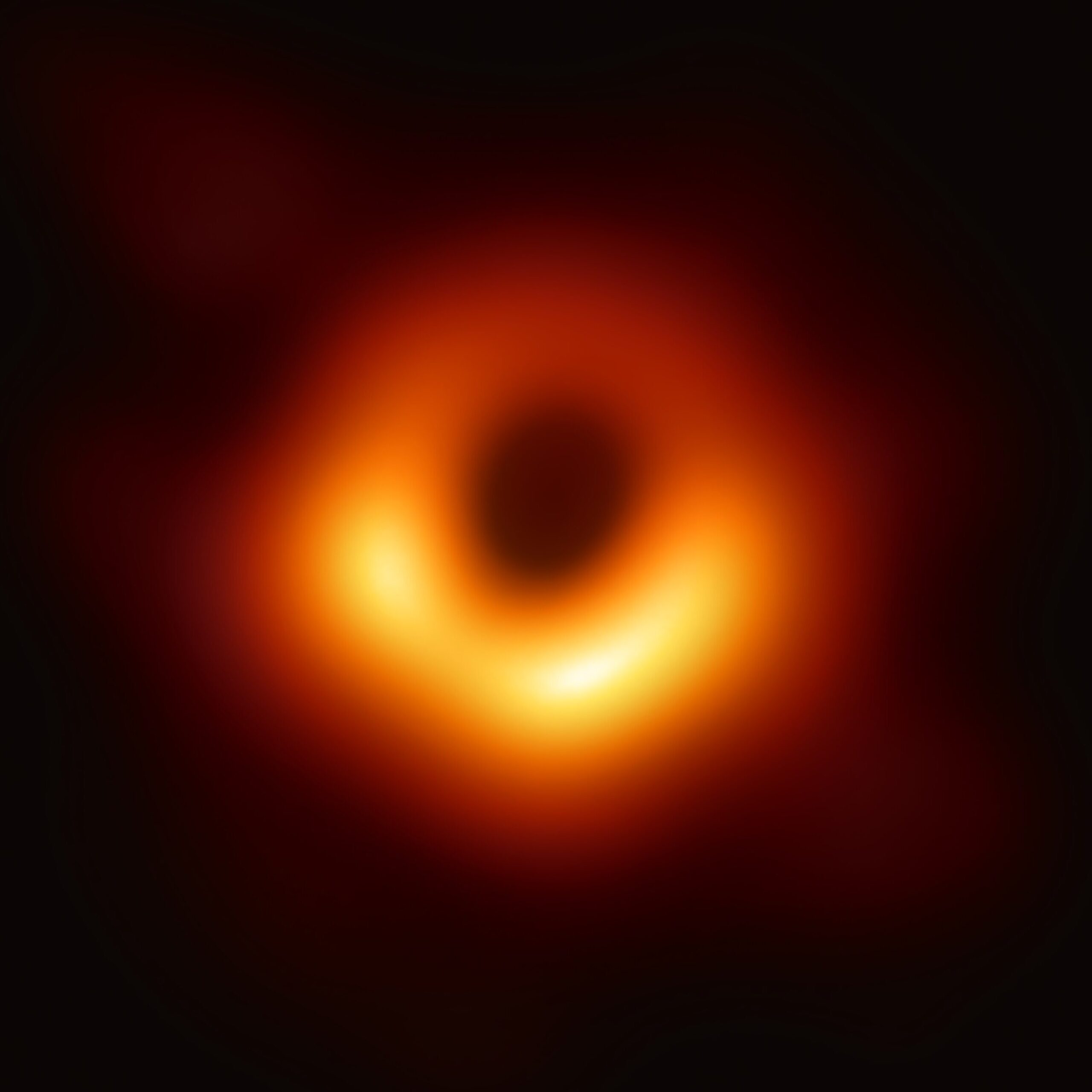
Consider a black hole: a region of space so thoroughly packed with matter that it inevitably collapses to a point of infinite density known as a singularity. This prediction arises from the theory of general relativity (GR), by some measures the most successful scientific theory ever created. The current consensus among physicists is that singularities are probably not a real feature of our universe. Instead, the fact that GR predicts a collapse to infinite density is thought to signify a breakdown in its validity, and we need a theory that combines gravity with quantum mechanics to understand these extreme conditions.
And yet, even if true singularities don’t exist, GR has somehow tapped into the eerie pulse of astrophysical reality–black holes are a real part of our universe.
Through the Looking Glass
Singularities aren’t the only place where infinities are found in GR; they can also arise in the phenomenon of gravitational lensing. This effect occurs when a region of space with lots of mass, such as a cluster of galaxies, is stretched by the weight of the matter it holds. This isn’t an exaggeration–GR literally describes gravity as the warping of spacetime by mass. Remarkably, this means that mass can bend the path of light. A massive enough galaxy cluster can cause light rays spread thousands of light-years apart to converge by directing them to a single focal point. It’s as if there was a cosmic magnifying glass bringing them together.
Using the magnifying effect of gravitational lensing, astronomers can observe objects at immense distances, far further than they would usually be visible. However, for this effect to work, an object has to sit at just the right position–exactly behind a large cluster of galaxies from our perspective–a configuration that seems exceedingly unlikely. Fortunately, the alignment doesn’t have to be perfect. Even if a source is a little off center, it can still be magnified by several to tens of times. To achieve this same increase in signal without lensing, a telescope would have to take an exposure over a hundred times longer.
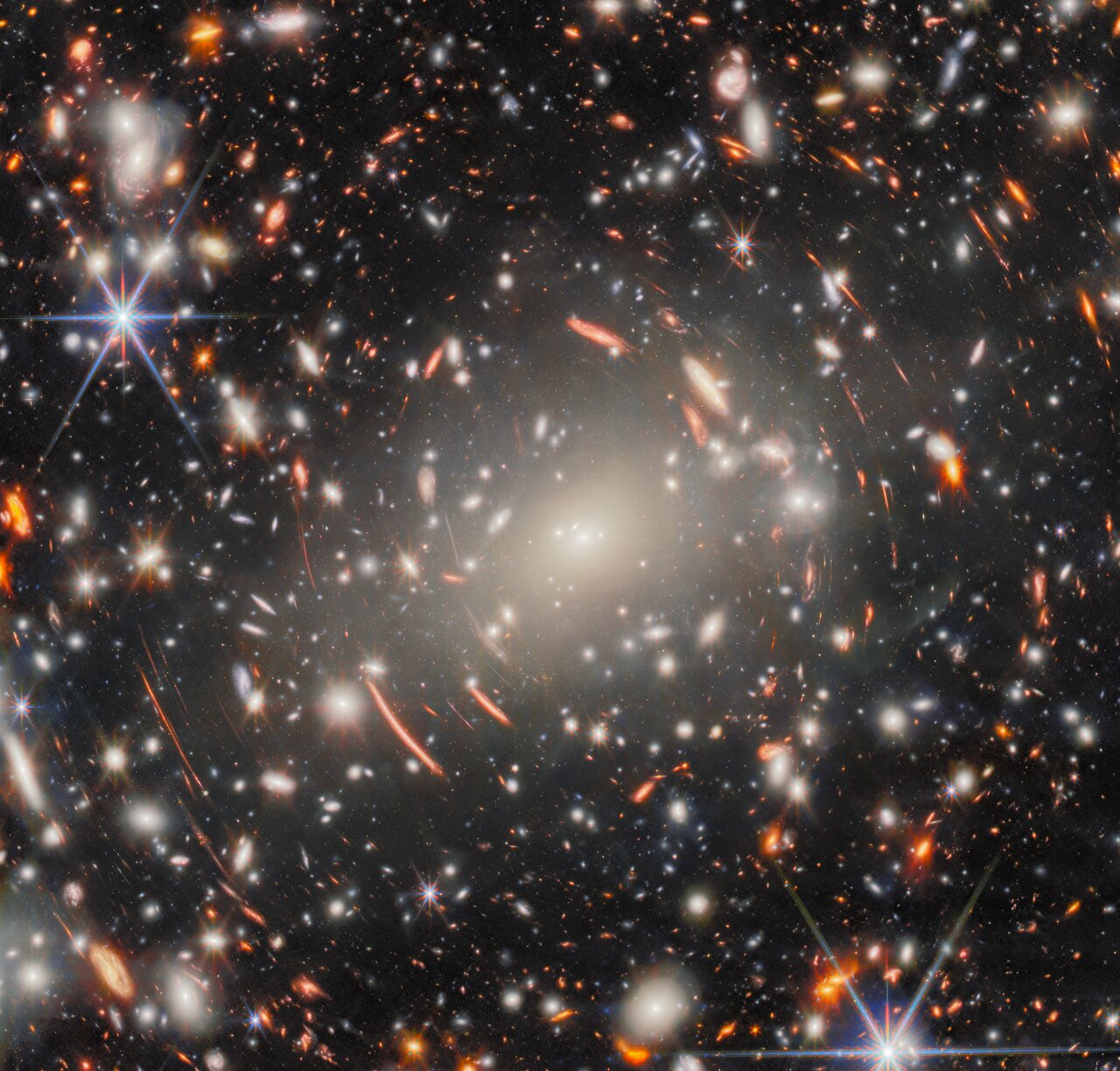
But what happens when the alignment is perfect? The strongest magnification of background sources by a foreground galaxy cluster occurs along curves called critical lines. According to GR, a source lying perfectly on the critical line would experience infinite magnification. As exciting as that sounds, the finite size of background sources and foreground clusters limits a true infinity from setting in, which keeps us from being fried each time a stars crosses such a curve.
A Serendipitous Alignment… Or Four
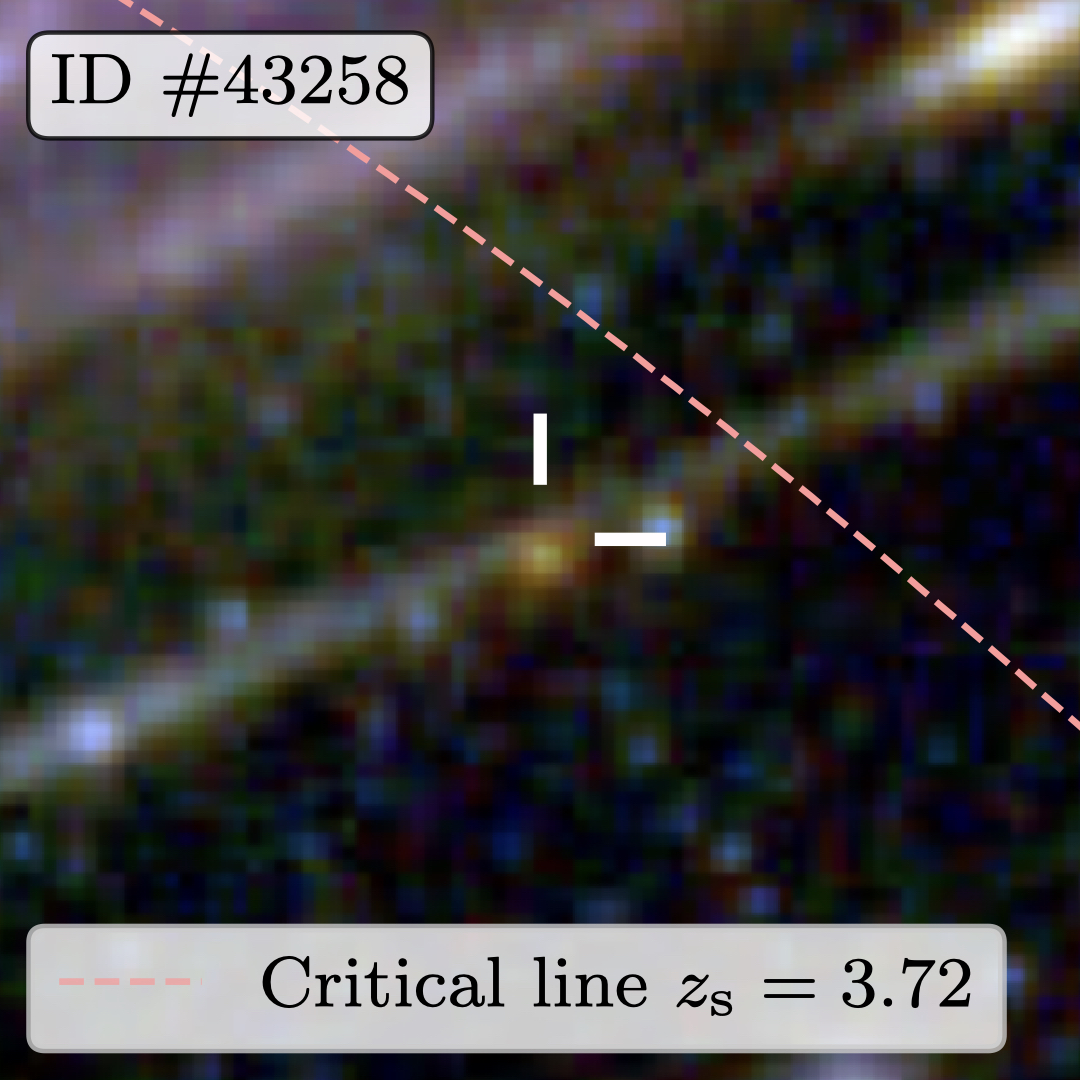
But hold that thought–though a star might not be magnified infinitely, a source very close to the critical line can appear orders of magnitude brighter than it otherwise would. Usually, we can only identify individual stars in our local universe, as they appear too faint to observe at cosmological distances. When we see distant galaxies, we’re instead seeing the light from many millions or billions of stars pooled together. However, a single star passing near the critical line of a foreground lensing cluster might be magnified by a factor of a thousand or more, allowing it to be seen at far greater distances.
The authors of today’s paper identify four objects experiencing exactly these kinds of chance alignments, called caustic crossings, leveraging data from JWST. Specifically, the authors use images taken as part of the GLIMPSE program, which observed the galaxy cluster Abell S1063 with JWST’s NIRCam instrument for approximately 120 hundred hours. NIRCam is already one of the most sensitive infrared instruments ever created–gravitational lensing juices up its power to the next level. The combination of the long exposure time of the images and the additional magnification from lensing means that the GLIMPSE observations probe some of the faintest astronomical sources ever observed.
The authors make use of a lens model, a theoretical map of the magnification experienced by background sources across the image. Interestingly, gravitational lensing can cause images of a background source to appear in multiple places (analogous to a mirage, in which you might see an inverted image above the normal one). Initially, they started by searching for counterparts to known images of galaxies, using the lens model to determine where they should be located. While carrying out this search, they identified four point sources within the expected positions of these galaxy mirror images. The most distant is located at a redshift of 3.72, which means that we’re seeing it as it appeared 12 billion years ago, while the most strongly magnified is being brightened by a factor of nearly 5000.
Some Critical Observations
The authors next study the spectral energy distribution (SED) of each source, or the amount of light emitted at various wavelengths. They find that three of the sources are well-modeled as asymptotic giant branch (AGB) stars, objects which represent a late phase of stellar evolution passed through by stars with masses within a few times that of our Sun.
The discovery of these objects is particularly interesting, as most of the individual stars seen with gravitational lensing until now have been extremely hot and luminous–essentially the “tip of the iceberg” of the stellar population. AGB stars, on the other hand, represent an evolutionary phase that vastly more numerous and “normal” stars experience. AGB stars also created most of the nitrogen and astronomical dust in present-day galaxies. JWST has uncovered surprising findings about both of these ingredients in the early universe, so directly studying their primary source might yield the key insight to understand these mysteries.
The remaining object, nicknamed Hedorah, appears to instead be a yellow supergiant star. Since this source is the furthest from the critical line, it’s magnified by a measly factor of 100. The fact that it’s still visible in these images means that it must be fairly massive and luminous (hence, a supergiant star). However, the authors find that true magnification of this source might be underestimated in the lens model, since the magnification from gravitational lensing can change by orders of magnitude over just a few pixels in the image. It thus might be possible that Hedorah is instead a somewhat fainter Cepheid variable star. This would be particularly intriguing because Cepheids are standard candles, extremely useful tools to test our models of the universe’s expansion.
While these results are extremely promising, the authors caution that certain alternative explanations cannot be completely ruled out with the current data. More detailed follow-up observations are needed to definitively understand the true nature of these tantalizing sources. Nonetheless, this work demonstrates the exciting potential of gravitational lensing to uncover individual stars at unfathomable distances. By getting a glimpse of sources in the midst of these astonishing alignments, we may be able to gain unique insight into some of the most fundamental problems in astronomy.
Astrobite edited by Flavia Pascal
Featured image credit: NASA’s Goddard Space Flight Center/Chris Smith (KBRwyle), adapted.
