

• RSS
  • Submit a Guest Post
  • Undergraduates: Submit your Research!
  • Suggest a Paper Topic!
astrobites
  • About
    • About Astrobites
    • Meet the Authors
    • Statement of Inclusivity
    • Copyright & Permissions
  • Latest Research
    • Daily Paper Summaries
    • Classics
    • Undergrad Research
    • Physical Review Coverage
  • Beyond astro-ph
    • Beyond astro-ph Library
    • Interviews
    • Career Navigation
    • Personal Experiences
    • Current Events
    • Teaching with Astrobites
  • Guides
    • EM Spectrum
    • Galaxies & AGNs
    • Spectroscopy and Spectral Lines
    • Adaptive Optics
    • Gravitational Waves
    • Transient Astronomy
    • Astrophysical Software
    • Graduate School
    • Writing a personal statement for grad apps
    • First Observing Run
    • …More Guides!
Select Page
The Astrobites Ask-Me-Anything is Live on Reddit

The Astrobites Ask-Me-Anything is Live on Reddit

by Ben Cook | Jun 11, 2015 | Daily Paper Summaries

You can now log on to Reddit and ask the Astrobites team all your astronomy, physics, and grad-school related questions!Ask Us Anything!Astrobiters will be answering your questions all day long. Come join the...
Astrobites takes over Reddit – June 11

Astrobites takes over Reddit – June 11

by Ben Cook | Jun 10, 2015 | Quick Notes

Starting tomorrow (Thursday June 11), Astrobites will be hosting a Reddit “Ask Me Anything” on /r/science! The thread will go live at 8 AM Eastern, and Astrobiters will be responding to your questions by 1 PM.
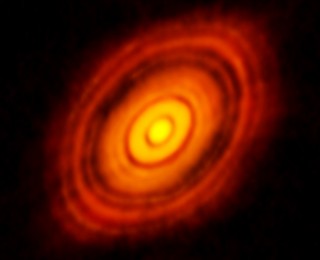
Forming Rings in a Protoplanetary Disk

Forming Rings in a Protoplanetary Disk

by Ben Cook | May 13, 2015 | Daily Paper Summaries

The authors of today’s paper show that the locations of the protoplanetary gaps in HL Tau are to be expected from the condensation points of common ices in the disk.
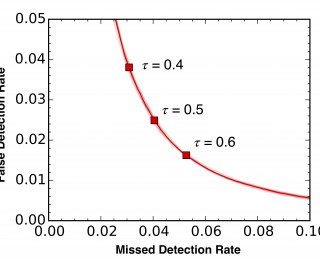
C-3PO, PhD: Machine Learning in Astronomy

C-3PO, PhD: Machine Learning in Astronomy

by Ben Cook | Apr 15, 2015 | Daily Paper Summaries

AutoScan was able to correctly identify real sources in the validation set 96% of the time, with a false detection (claiming an artifact to be a source) rate of only 2.5%.
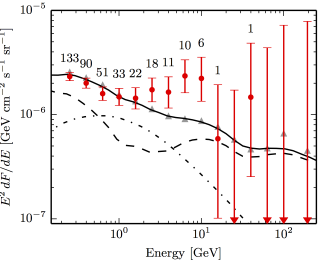
A Possible Detection of Dark Matter in a Dwarf Galaxy!

A Possible Detection of Dark Matter in a Dwarf Galaxy!

by Ben Cook | Mar 18, 2015 | Daily Paper Summaries

If dark matter particles can collide to release gamma-rays, the best place to see them will be in the centers of dwarf galaxies. Archival Fermi-LAT images around Reticulum 2 show the first ever detection of gamma-rays from a dwarf galaxy. Dark matter detection may be close at hand!

« Older Entries
Next Entries »

Loading

Follow our socials

  • Bluesky
  • Facebook
  • Instagram
  • RSS Feed

More Posts About

AAS AGN astronomy astrophysics binary stars black holes cosmology dark matter dwarf galaxies exoplanets galaxies galaxy evolution gravitational waves habitability JWST Kepler Milky Way observations planetary science planet formation protoplanetary disks radio astronomy simulations solar system spectroscopy star formation stars stellar evolution supernovae theory

Posts by Category

  • Accessibility
  • Applications
  • Beyond
  • Book Reviews
  • Career Navigation
  • Classics
  • Climate Change
  • Course Assignments
  • Crossposts
  • Current Events
  • Daily Paper Summaries
  • Game Reviews
  • Guides
  • Historical Astronomy
  • Instrumentation
  • Interviews
  • Outreach
  • Personal Experiences
  • PRJ
  • Quick Notes
  • Satellites
  • Teaching
  • Undergraduate Research

More Astronomy

  • AAS
  • AAS Nova
  • astro-ph
  • AstroBetter
  • APOD

Read Astrobites in Other Languages

  • Astrobitos (Spanish)
  • Astropontos (Portuguese)
  • staryab (Farsi)

Listen to Astrobites

  • astro[sound]bites

Discover More Incredible Science

  • ScienceBites Network
  • RSS

© 2026 Astrobites | All Rights Reserved | Supported by AAS | Designed by Elegant Themes | Powered by WordPress