by Elisabeth Newton | Jun 9, 2011 | Daily Paper Summaries
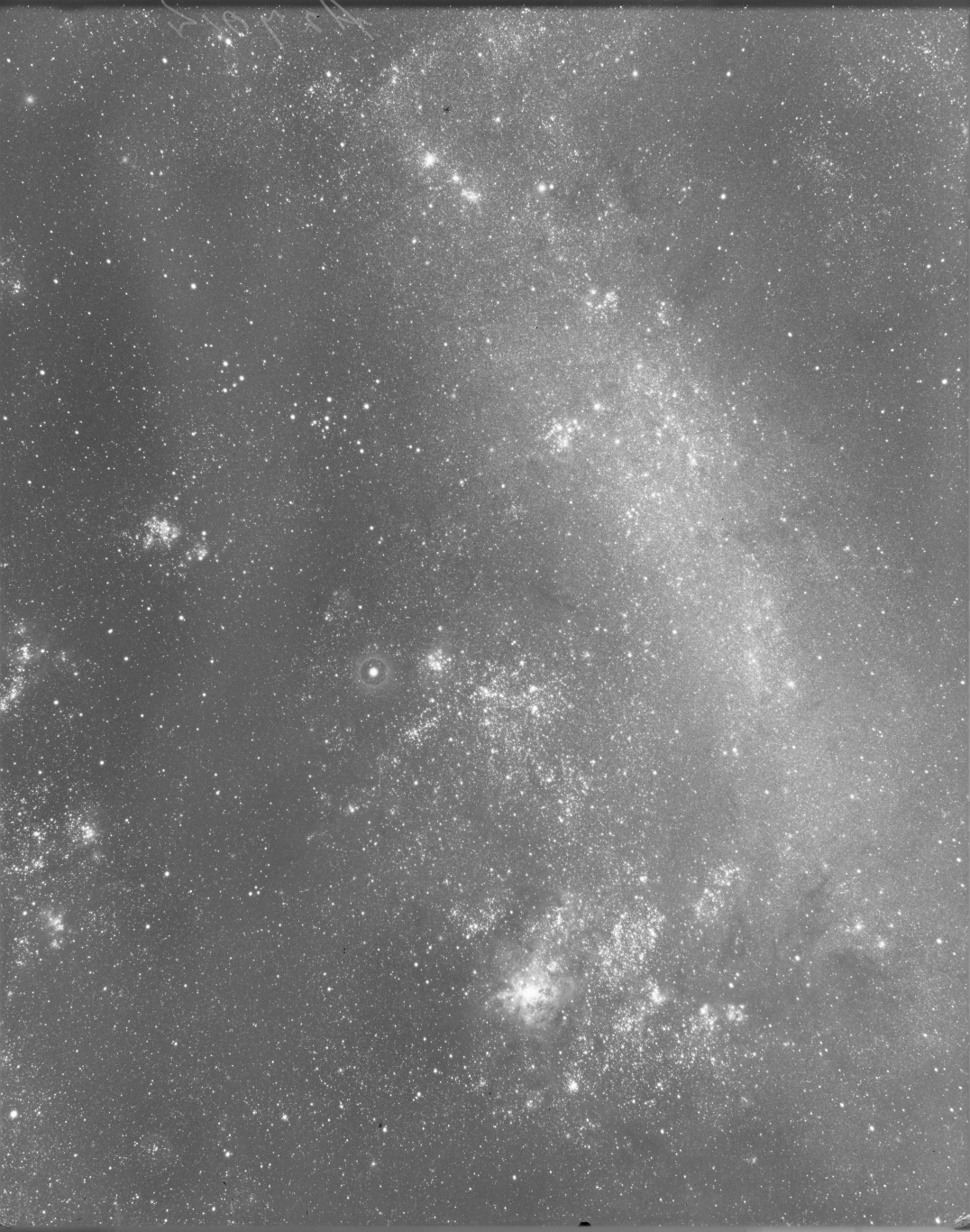
How do stars vary on a hundred year time scale? The DASCH (Digital Access to a Sky Century @ Harvard) Team has been looking back at data taken over the last century in order to answer this question. This paper reports the most recent DASCH discovery, which concerns the star KU Cyg. This is an eclipsing binary system in which a more massive F star is gaining mass from a red giant. The authors noticed a 0.5 magnitude drop in the brightness of the star around 1900 that lasts for five years.

by Elisabeth Newton | May 26, 2011 | Career Navigation, Personal Experiences
Over the past three and a half days, I joined astronomers from all over the world for the 218th meeting of the American Astronomical Society. The AAS holds two major meetings every year, one in the winter and one in the summer. This year’s summer conference in Boston just wrapped up and in this astrobite I’ll report on two of the talks I attended.
by Elisabeth Newton | May 1, 2011 | Daily Paper Summaries
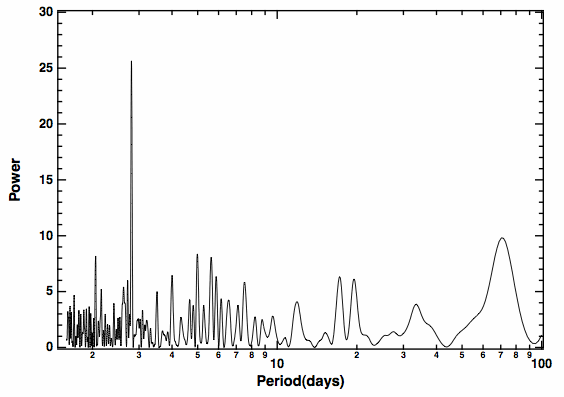
This is the story of exoplanet 55 Cnc e, which was first identified via the radial velocity method as a 14 Earth-mass planet on a 2.8 day orbit. A re-analysis in 2010 pointed towards an even shorter period orbit and a paper on the arxiv last week followed up on those predictions.
by Elisabeth Newton | Apr 27, 2011 | Daily Paper Summaries
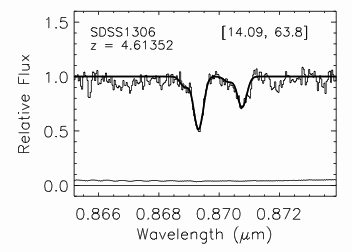
As the light from these distant objects propagates towards us, it encounters metals in the intervening IGM that superimpose absorption lines on the quasar’s spectra. By looking for metal absorption lines in the spectra of high redshifts quasars, we can learn about the metal content of the IGM. This paper by Simcoe et al. considers the spectra of 7 quasars with redshifts greater than 5.5. The moderate-resolution, near-infrared spectra were obtained over the past year with the FIRE spectrograph.
by Elisabeth Newton | Apr 13, 2011 | Daily Paper Summaries
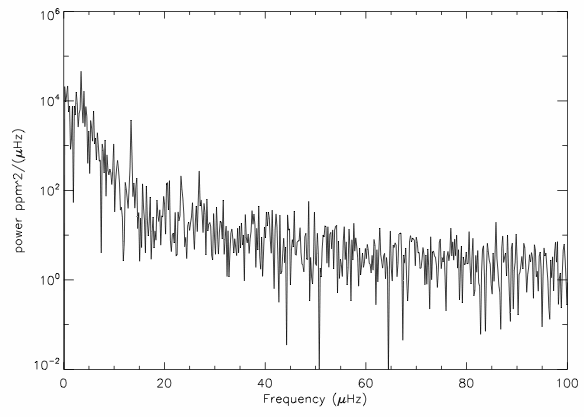
Stellar variability has received more attention recently due to the problems it poses in the detection of exoplanets; however the study of variability is a field of its own. What causes activity? How does magnetic activity vary with different stars? This paper looks at results from the CoRoT satellite (for Convection, Rotation and planetary Transits), which was launched in December of 2006. This paper is concerned with the long-term photometric microvariability of stars and how stellar activity relates to rotation period and temperature.
