by Elisabeth Newton | Aug 17, 2011 | Daily Paper Summaries
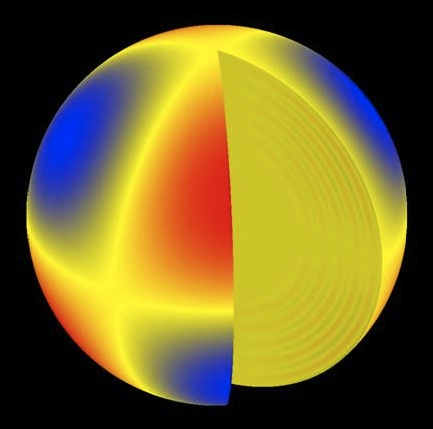
If there’s one type of star you’d think astronomers would know a lot about, it’s probably solar-type stars. After all, humans have been staring at our very near neighbor for millennia and in the recent century have dedicated entire space missions to studying this archetype. But there is always more to be learned and new tools like asteroseismology continue to open up avenues of study previously closed.
by Elisabeth Newton | Jul 21, 2011 | Daily Paper Summaries
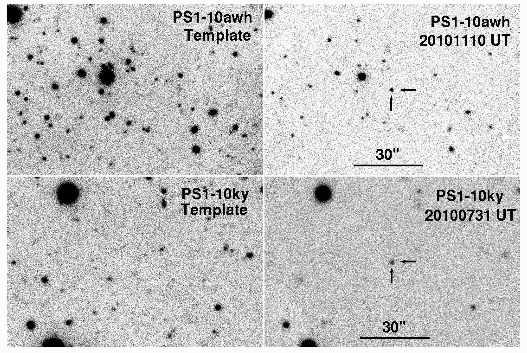
Starting in 2005 with SN 2005ap, astronomers began to detect new transients that are far more luminous than previously-known supernovae. With brightnesses ten times those seen in Type 1a’s, these new supernovae have been dubbed “ultraluminous supernovae.” This paper presents two new supernovae discovered by Pan-STARRS.
by Elisabeth Newton | Jul 7, 2011 | Quick Notes
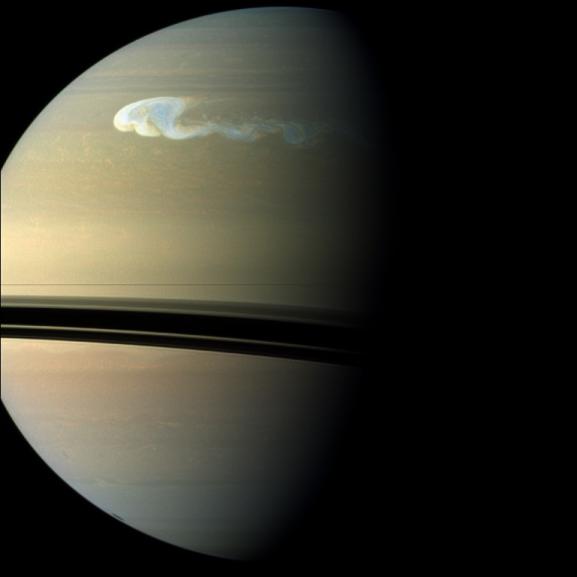
In the most recent issue of Nature, two articles were published about Saturn’s most recent Great White Spot; these features are huge storms on Saturn which occur once every 30 years or so (a year on Saturn is 29.5 Earth years). This storm appeared in mid-December, a bit ahead of schedule.Since there are already so many articles about it, I thought I would just post some links: Nature news article Nature letter: Sánchez-Lavega et al. (2011) Nature letter: Fischer et al. (2011) LA Times article NASA/ Cassini Mission article Saturn’s Great White Spot. From NASA/JPL:...
by Elisabeth Newton | Jul 5, 2011 | Daily Paper Summaries
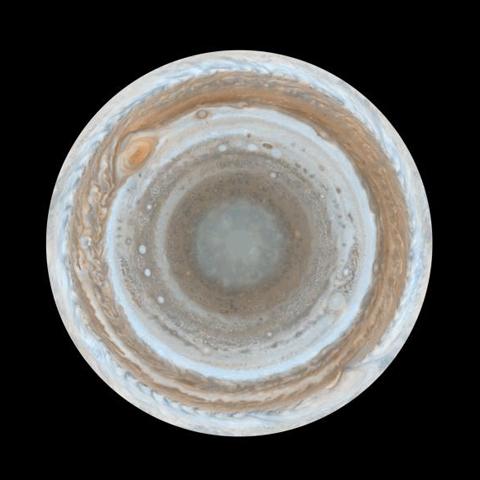
In this paper, techniques from helioseismology – using waves to learn about the interior of the Sun – are applied to yet another object: Jupiter. Because Jupiter is largely a fluid, like the Sun, astronomers have expected it to show global seismic behavior since the mid-1970s; the signal was even theorized to be about the same magnitude as solar oscillations. However, attempts to detect Jupiter’s global oscillations in the 80s and 90s were largely unsuccessful.
by Elisabeth Newton | Jun 23, 2011 | Daily Paper Summaries
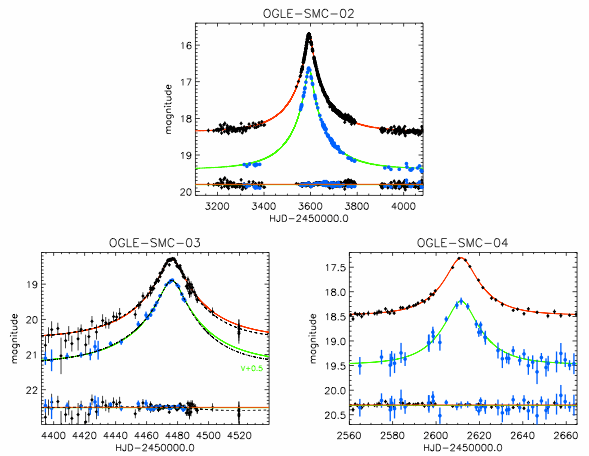
In previous astrobites posts, we’ve talked about using microlensing to find planets and to detect dark matter in other galaxies. However, one of the earliest applications of microlensing was a bit closer to home: the detection of compact objects in the dark matter halo of our own galaxy. We know there is a lot more mass in galaxies, including our own, than what we can see. Dark matter comprises more than 80% of the matter in our Universe, but what is it really comprised of?
