by Elisabeth Newton | Apr 9, 2011 | Daily Paper Summaries
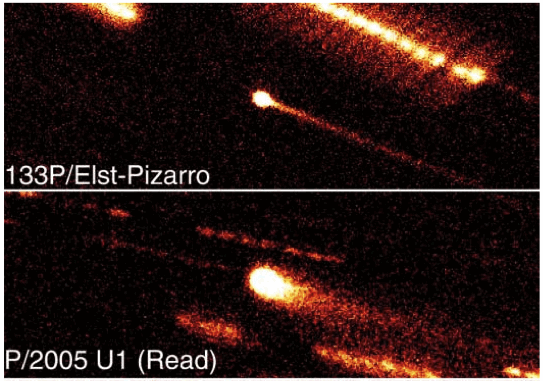
In 2006 Hsieh & Jewitt published the discovery of several main belt asteroids observed to have tails (just like comets do), which activate when nearest the Sun (just like comets do). In this paper, Licandro et al. test the origins of two so-called “main belt comets” by looking at spectra.
by Elisabeth Newton | Mar 31, 2011 | Career Navigation, Personal Experiences
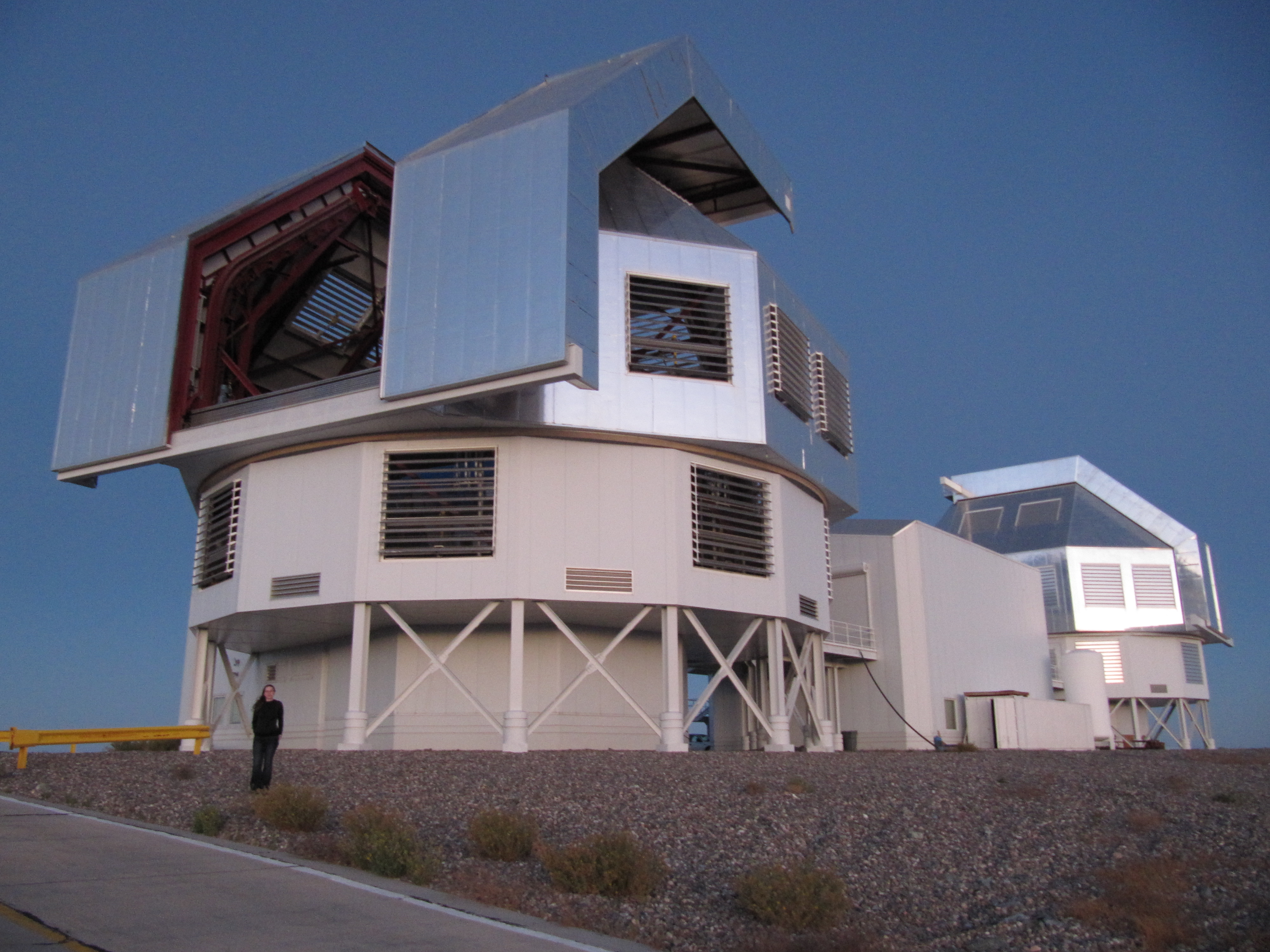
Last week I spent two nights observing on Magellan, in Chile. It was my first observing trip and there was a lot more to it than expected!
by Elisabeth Newton | Mar 16, 2011 | Quick Notes
If anyone has yet to see yesterday’s astronomy picture of the day, it’s stunning. (The video has sound too!)http://apod.nasa.gov/apod/ap110315.htmlI always find beautiful astronomy pictures inspiring, but this video is especially amazing. I have to remind myself it’s not an...
by Elisabeth Newton | Mar 3, 2011 | Daily Paper Summaries
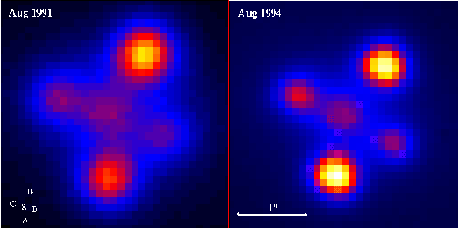
Some strong gravitational lenses exhibit what are known as “anomalous flux ratios”: the multiple images don’t have the same flux. One possible explanation for this is microlensing, which results from the gravitational influence of stars and perhaps dark matter.
by Elisabeth Newton | Feb 24, 2011 | Daily Paper Summaries
Planetary nebulae form during late stages of the evolution of low to intermediate mass stars. In this paper, Guzman-Ramirez et al. explore two possible explanations for the presence of carbon in Galactic Bulge planetary nebulae.
