• RSS
  • Submit a Guest Post
  • Undergraduates: Submit your Research!
  • Suggest a Paper Topic!
astrobites
  • About
    • About Astrobites
    • Meet the Authors
    • Statement of Inclusivity
    • Copyright & Permissions
  • Latest Research
    • Daily Paper Summaries
    • Classics
    • Undergrad Research
    • Physical Review Coverage
  • Beyond astro-ph
    • Beyond astro-ph Library
    • Interviews
    • Career Navigation
    • Personal Experiences
    • Current Events
    • Teaching with Astrobites
  • Guides
    • EM Spectrum
    • Galaxies & AGNs
    • Spectroscopy and Spectral Lines
    • Adaptive Optics
    • Gravitational Waves
    • Transient Astronomy
    • Astrophysical Software
    • Graduate School
    • Writing a personal statement for grad apps
    • First Observing Run
    • …More Guides!
Select Page
Do Pulsars surf on waves of dark matter?

Do Pulsars surf on waves of dark matter?

by Luna Zagorac | Oct 25, 2023 | Daily Paper Summaries, PRJ

If every pulsar had more motion
Across the galactic plane
Then they’d all be surfin’
On fuzzy dark matter, yeah

Meet the AAS Keynote Speakers: Prof. Francis Halzen

Meet the AAS Keynote Speakers: Prof. Francis Halzen

by Luna Zagorac | Jun 14, 2022 | Career Navigation, Current Events, Personal Experiences

How does a non-astronomer, experimentalist, non-engineer build an cosmic neutrino detector at the South Pole? Tune into Prof. Francis Halzen’s #AAS240 Bruno Rossi Prize talk to catch a glimpse.
Atmospheres of Small Planets Through a Big Telescope

Atmospheres of Small Planets Through a Big Telescope

by Luna Zagorac | Dec 22, 2021 | Daily Paper Summaries

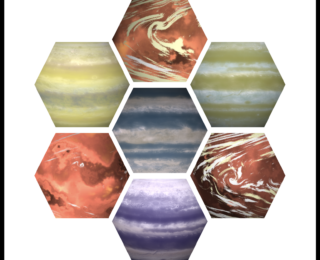
Astronomers around the world are excited about the launch of a new telescope! In today’s bite, read about what that might bring for detections of biosignatures in the atmospheres of exoplanets.
Adversarial Networks, Collaborative Cosmology

Adversarial Networks, Collaborative Cosmology

by Luna Zagorac | Nov 18, 2021 | Daily Paper Summaries

Can fake data help to make real computational gains? In today’s paper, the authors describe using machine learning to boost the resolution of cosmological simulations.
Self-Interacting Dark Matter: A Better Destroyer of Galaxies

Self-Interacting Dark Matter: A Better Destroyer of Galaxies

by Luna Zagorac | Sep 16, 2021 | Daily Paper Summaries

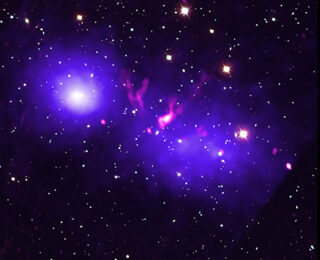
When galaxies fall into galaxy clusters, the consequences can be quite epic. But are they more epic with Self-Interacting Dark Matter? Today’s paper suggests the answer is yes. Bite also available in Dutch / Deze Bite is ook beschikbaar in het Nederlands!

« Older Entries

Loading

Follow our socials

  • Bluesky
  • Facebook
  • Instagram
  • RSS Feed

More Posts About

AAS AGN astronomy astrophysics binary stars black holes cosmology dark matter dwarf galaxies exoplanets galaxies galaxy evolution gravitational waves habitability JWST Kepler Milky Way observations planetary science planet formation protoplanetary disks radio astronomy simulations solar system spectroscopy star formation stars stellar evolution supernovae theory

Posts by Category

  • Accessibility
  • Applications
  • Beyond
  • Book Reviews
  • Career Navigation
  • Classics
  • Climate Change
  • Course Assignments
  • Crossposts
  • Current Events
  • Daily Paper Summaries
  • Game Reviews
  • Guides
  • Historical Astronomy
  • Instrumentation
  • Interviews
  • Outreach
  • Personal Experiences
  • PRJ
  • Quick Notes
  • Satellites
  • Teaching
  • Undergraduate Research

More Astronomy

  • AAS
  • AAS Nova
  • astro-ph
  • AstroBetter
  • APOD

Read Astrobites in Other Languages

  • Astrobitos (Spanish)
  • Astropontos (Portuguese)
  • staryab (Farsi)

Listen to Astrobites

  • astro[sound]bites

Discover More Incredible Science

  • ScienceBites Network
  • RSS

© 2026 Astrobites | All Rights Reserved | Supported by AAS | Designed by Elegant Themes | Powered by WordPress