• RSS
  • Submit a Guest Post
  • Undergraduates: Submit your Research!
  • Suggest a Paper Topic!
astrobites
  • About
    • About Astrobites
    • Meet the Authors
    • Statement of Inclusivity
    • Copyright & Permissions
  • Latest Research
    • Daily Paper Summaries
    • Classics
    • Undergrad Research
    • Physical Review Coverage
  • Beyond astro-ph
    • Beyond astro-ph Library
    • Interviews
    • Career Navigation
    • Personal Experiences
    • Current Events
    • Teaching with Astrobites
  • Guides
    • EM Spectrum
    • Galaxies & AGNs
    • Spectroscopy and Spectral Lines
    • Adaptive Optics
    • Gravitational Waves
    • Transient Astronomy
    • Astrophysical Software
    • Graduate School
    • Writing a personal statement for grad apps
    • First Observing Run
    • …More Guides!
Select Page
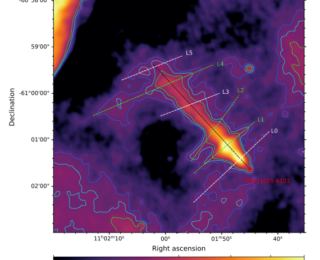
Cosmic Fishbones: Strange Radio Streaks Behind a Racing Pulsar

Cosmic Fishbones: Strange Radio Streaks Behind a Racing Pulsar

by Sandy Chiu | Feb 21, 2026 | Daily Paper Summaries

As a pulsar speeds through the interstellar medium, it leaves behind a long, radio-emitting tail shaped by ram pressure. In the Lighthouse Nebula, however, the X-ray emission and radio streaks show unexpected orientations, offering clues to how cosmic rays escape and trace surrounding magnetic fields.

Global Calm, Local Chaos: How AGN-Driven Cosmic Rays Reshape Galaxies from the Inside

Global Calm, Local Chaos: How AGN-Driven Cosmic Rays Reshape Galaxies from the Inside

by Sandy Chiu | Jan 15, 2026 | Classics, Daily Paper Summaries

Massive galaxies all seem to end up quiet and quenched—but the physics inside them can look wildly different. This story explores how AGN-driven cosmic rays reshape galaxies from the inside out, changing local conditions without altering their ultimate fate.
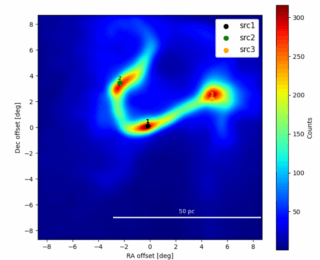
How One Pulsar Can Look Like Three: Cosmic-Ray Mirage Halos in the Gamma-Ray Sky

How One Pulsar Can Look Like Three: Cosmic-Ray Mirage Halos in the Gamma-Ray Sky

by Sandy Chiu | Dec 13, 2025 | Classics, Daily Paper Summaries, PRJ

Cosmic rays don’t always reveal their origins honestly—magnetic fields can bend their paths and create “mirage halos” that look like real gamma-ray sources. New simulations show how a single pulsar can masquerade as three, reshaping how we interpret TeV observations.
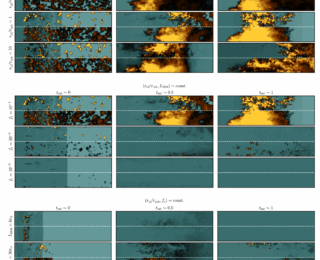
Strength in Numbers: How Cloud Communities Weather Galactic Storms

Strength in Numbers: How Cloud Communities Weather Galactic Storms

by Sandy Chiu | Nov 24, 2025 | Classics, Daily Paper Summaries

Classic theory says only big clouds should survive galactic winds, but these new simulations show that’s not the whole story. Whether a cloud lives or dies depends not only on its size, but also on the environment it’s sitting in.
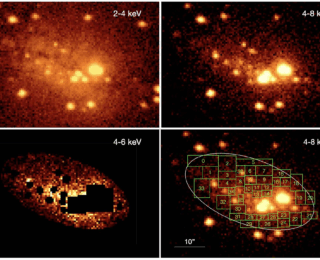
Cosmic Rays and their Observational Signatures

Cosmic Rays and their Observational Signatures

by Sandy Chiu | Aug 25, 2025 | Classics, Daily Paper Summaries

Cosmic rays, born from powerful events like exploding stars, are a key but elusive part of a galaxy’s interstellar medium. Today’s paper combines gamma-ray, X-ray, infrared, and radio observations of M82 to untangle how cosmic rays and magnetic fields shape its energetic core.

« Older Entries

Loading

Follow our socials

  • Bluesky
  • Facebook
  • Instagram
  • RSS Feed

More Posts About

AAS AGN astronomy astrophysics binary stars black holes cosmology dark matter dwarf galaxies exoplanets galaxies galaxy evolution gravitational waves habitability JWST Kepler Milky Way observations planetary science planet formation protoplanetary disks radio astronomy simulations solar system spectroscopy star formation stars stellar evolution supernovae theory

Posts by Category

  • Accessibility
  • Applications
  • Beyond
  • Book Reviews
  • Career Navigation
  • Classics
  • Climate Change
  • Course Assignments
  • Crossposts
  • Current Events
  • Daily Paper Summaries
  • Game Reviews
  • Guides
  • Historical Astronomy
  • Instrumentation
  • Interviews
  • Outreach
  • Personal Experiences
  • PRJ
  • Quick Notes
  • Satellites
  • Teaching
  • Undergraduate Research

More Astronomy

  • AAS
  • AAS Nova
  • astro-ph
  • AstroBetter
  • APOD

Read Astrobites in Other Languages

  • Astrobitos (Spanish)
  • Astropontos (Portuguese)
  • staryab (Farsi)

Listen to Astrobites

  • astro[sound]bites

Discover More Incredible Science

  • ScienceBites Network
  • RSS

© 2026 Astrobites | All Rights Reserved | Supported by AAS | Designed by Elegant Themes | Powered by WordPress