• RSS
  • Submit a Guest Post
  • Undergraduates: Submit your Research!
  • Suggest a Paper Topic!
astrobites
  • About
    • About Astrobites
    • Meet the Authors
    • Statement of Inclusivity
    • Copyright & Permissions
  • Latest Research
    • Daily Paper Summaries
    • Classics
    • Undergrad Research
    • Physical Review Coverage
  • Beyond astro-ph
    • Beyond astro-ph Library
    • Interviews
    • Career Navigation
    • Personal Experiences
    • Current Events
    • Teaching with Astrobites
  • Guides
    • EM Spectrum
    • Galaxies & AGNs
    • Spectroscopy and Spectral Lines
    • Adaptive Optics
    • Gravitational Waves
    • Transient Astronomy
    • Astrophysical Software
    • Graduate School
    • Writing a personal statement for grad apps
    • First Observing Run
    • …More Guides!
Select Page
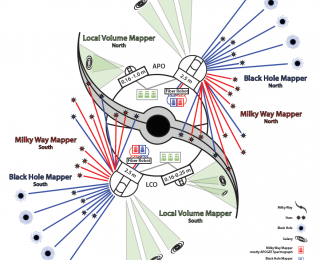
All-sky spectroscopy with SDSS-V

All-sky spectroscopy with SDSS-V

by Suk Sien Tie | Nov 28, 2017 | Daily Paper Summaries

A spectrum is worth a thousand pictures. But all-sky spectra? Well, I bet they are worth many many thousands of pictures — introducing SDSS-V.

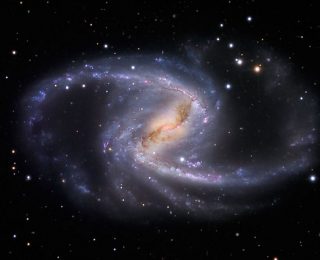
Feeding black holes through galactic bars

Feeding black holes through galactic bars

by Suk Sien Tie | Oct 26, 2017 | Daily Paper Summaries

Galactic bars channel gas into the central regions of spiral galaxies to birth new stars. Are they also responsible for lighting up the black holes?

Image Credit & Copyright: Martin Pugh Astrophotography
Detecting hot gas in the cosmic web

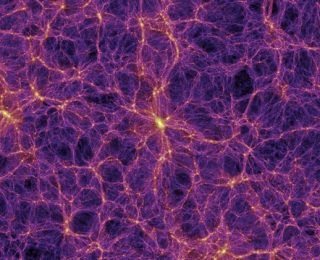
Detecting hot gas in the cosmic web

by Suk Sien Tie | Sep 22, 2017 | Daily Paper Summaries

Half of the total baryons in the late Universe seem to be missing. This paper set out to look for them in between the intertwined cosmic web. (Image: The Millennium Simulation)
Sneaky pete baryons in gravitational lensing

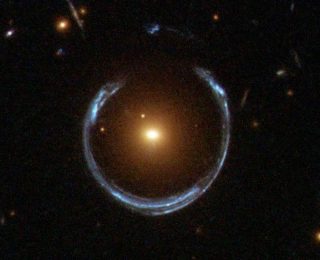
Sneaky pete baryons in gravitational lensing

by Suk Sien Tie | Aug 21, 2017 | Daily Paper Summaries

Gravitational lensing “shines light” on dark matter and allows us to find them effectively. But baryons may also disguise as false dark matter signal.

(Image Credit: ESA/Hubble & NASA)
Extreme variability quasars

Extreme variability quasars

by Suk Sien Tie | Jul 11, 2017 | Daily Paper Summaries

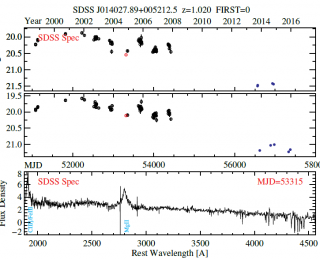
Of all things that flicker in the night sky, quasars are of them. Ramping up their typical variability by 400% and you get extreme variability quasars — let’s take a closer look.

« Older Entries

Loading

Follow our socials

  • Bluesky
  • Facebook
  • Instagram
  • RSS Feed

More Posts About

AAS AGN astronomy astrophysics binary stars black holes cosmology dark matter dwarf galaxies exoplanets galaxies galaxy evolution gravitational waves habitability JWST Kepler Milky Way observations planetary science planet formation protoplanetary disks radio astronomy simulations solar system spectroscopy star formation stars stellar evolution supernovae theory

Posts by Category

  • Accessibility
  • Applications
  • Beyond
  • Book Reviews
  • Career Navigation
  • Classics
  • Climate Change
  • Course Assignments
  • Crossposts
  • Current Events
  • Daily Paper Summaries
  • Game Reviews
  • Guides
  • Historical Astronomy
  • Instrumentation
  • Interviews
  • Outreach
  • Personal Experiences
  • PRJ
  • Quick Notes
  • Satellites
  • Teaching
  • Undergraduate Research

More Astronomy

  • AAS
  • AAS Nova
  • astro-ph
  • AstroBetter
  • APOD

Read Astrobites in Other Languages

  • Astrobitos (Spanish)
  • Astropontos (Portuguese)
  • staryab (Farsi)

Listen to Astrobites

  • astro[sound]bites

Discover More Incredible Science

  • ScienceBites Network
  • RSS

© 2026 Astrobites | All Rights Reserved | Supported by AAS | Designed by Elegant Themes | Powered by WordPress