Guest – Don’t Ask, Don’t Tell: Transgender Astrophysics in America
In today’s beyond post, an anonymous author reflects on why being transgender in astrophysics often feels like something best left unspoken, and what can be done.

In today’s beyond post, an anonymous author reflects on why being transgender in astrophysics often feels like something best left unspoken, and what can be done.
Trump fired all 24 members of the National Science Board at the end of April. In this bite we explore what this means for the NSF, science funding, and, more broadly, the American government, with a perspective from Dr. Keivan Stassun, an astrophysicist at Vanderbilt and a recent NSB member.

Literally and figuratively, Australia is closing its eyes to the future of astronomy. Where does that leave its next generation of students?
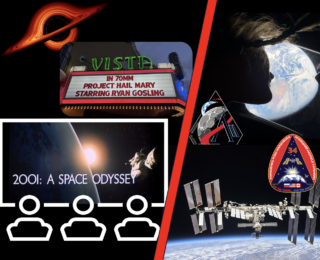
Recently the world has been entertained and inspired by Project Hail Mary and the Artemis II mission, so let’s compare some real and fictional space missions over the decades.
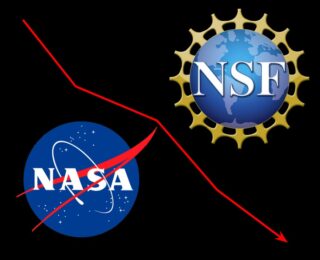
The president’s budget requests for NASA and the NSF were released last week. We summarizes the major cuts and their impacts while providing resources to help fight back against this attack on science.

Artemis, AI, Astronomy, and our place in it. The author asks why do astrophysics at all. To produce results faster, or to turn graduate students into inefficient stand-ins for software? Or because astronomy is one of the most human things we do. It gives us wonder, yes, but also responsibility: to remember the histories of colonialism and militarization tied to our instruments, to use new tools without surrendering judgment, and to insist that people remain the point of the enterprise. The universe is not only something to be computed. It is something to be encountered, interpreted, and loved.