• RSS
  • Submit a Guest Post
  • Undergraduates: Submit your Research!
  • Suggest a Paper Topic!
astrobites
  • About
    • About Astrobites
    • Meet the Authors
    • Statement of Inclusivity
    • Copyright & Permissions
  • Latest Research
    • Daily Paper Summaries
    • Classics
    • Undergrad Research
    • Physical Review Coverage
  • Beyond astro-ph
    • Beyond astro-ph Library
    • Interviews
    • Career Navigation
    • Personal Experiences
    • Current Events
    • Teaching with Astrobites
  • Guides
    • EM Spectrum
    • Galaxies & AGNs
    • Spectroscopy and Spectral Lines
    • Adaptive Optics
    • Gravitational Waves
    • Transient Astronomy
    • Astrophysical Software
    • Graduate School
    • Writing a personal statement for grad apps
    • First Observing Run
    • …More Guides!
Select Page
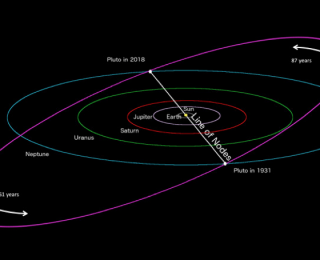
Like a Captured Stone: How did Pluto Settle in its Peculiar Orbit?

Like a Captured Stone: How did Pluto Settle in its Peculiar Orbit?

by Vatsal Panwar | Apr 13, 2018 | Classics, Daily Paper Summaries

We dive back into one of the earliest studies of the outer solar system that helped us understand how four gas giants playing a chaotic game of catch could have knocked Pluto into its topsy-turvy orbit.
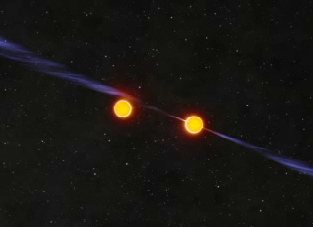
Looking back at the Hulse-Taylor Binary Pulsar

Looking back at the Hulse-Taylor Binary Pulsar

by Joshua Kerrigan | Feb 2, 2018 | Classics

We revisit the discovery of the binary pulsar and it’s important impact on modern astronomy and astrophysics.
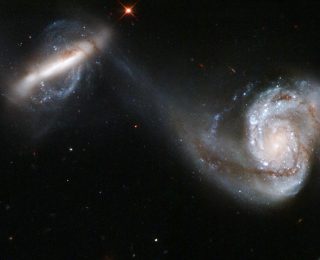
Astrophysical Classics: A Burst of Inspiration

Astrophysical Classics: A Burst of Inspiration

by Mia de los Reyes | Jan 26, 2018 | Classics, Daily Paper Summaries

The year is 1978. Some people are wondering how star formation works in weird-looking galaxies.
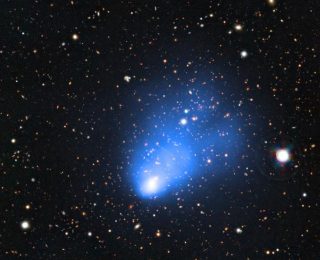
What is the Most Massive Object in the Universe?

What is the Most Massive Object in the Universe?

by Gourav Khullar | Dec 6, 2017 | Classics, Daily Paper Summaries

Trying to find the most massive galaxy cluster in the night sky can be hard. Comparing predictions of these masses to observed clusters? Even harder. An insight into the world of Halo Mass Functions and their tail-ends.

Astrophysical Classics: The Lost Art of Fishing in a Black Hole

Astrophysical Classics: The Lost Art of Fishing in a Black Hole

by Zephyr Penoyre | Sep 20, 2017 | Classics, Daily Paper Summaries

In a strange, half-lost, piece of work Roger Penrose draws four figures dropping their lines into the depths of a black hole, and in doing so finds a new and hugely influential way to steal energy away from the heart of a spinning singularity.

The First Pulsar

The First Pulsar

by Joshua Kerrigan | Sep 15, 2017 | Classics

The first detection of a pulsar and the first Nobel Prize in Physics for an astronomical detection.

« Older Entries
Next Entries »

Loading

Follow our socials

  • Bluesky
  • Facebook
  • Instagram
  • RSS Feed

More Posts About

AAS AGN astronomy astrophysics binary stars black holes cosmology dark matter dwarf galaxies exoplanets galaxies galaxy evolution gravitational waves habitability JWST Kepler Milky Way observations planetary science planet formation protoplanetary disks radio astronomy simulations solar system spectroscopy star formation stars stellar evolution supernovae theory

Posts by Category

  • Accessibility
  • Applications
  • Beyond
  • Book Reviews
  • Career Navigation
  • Classics
  • Climate Change
  • Course Assignments
  • Crossposts
  • Current Events
  • Daily Paper Summaries
  • Game Reviews
  • Guides
  • Historical Astronomy
  • Instrumentation
  • Interviews
  • Outreach
  • Personal Experiences
  • PRJ
  • Quick Notes
  • Satellites
  • Teaching
  • Undergraduate Research

More Astronomy

  • AAS
  • AAS Nova
  • astro-ph
  • AstroBetter
  • APOD

Read Astrobites in Other Languages

  • Astrobitos (Spanish)
  • Astropontos (Portuguese)
  • staryab (Farsi)

Listen to Astrobites

  • astro[sound]bites

Discover More Incredible Science

  • ScienceBites Network
  • RSS

© 2026 Astrobites | All Rights Reserved | Supported by AAS | Designed by Elegant Themes | Powered by WordPress