• RSS
  • Submit a Guest Post
  • Undergraduates: Submit your Research!
  • Suggest a Paper Topic!
astrobites
  • About
    • About Astrobites
    • Meet the Authors
    • Statement of Inclusivity
    • Copyright & Permissions
  • Latest Research
    • Daily Paper Summaries
    • Classics
    • Undergrad Research
    • Physical Review Coverage
  • Beyond astro-ph
    • Beyond astro-ph Library
    • Interviews
    • Career Navigation
    • Personal Experiences
    • Current Events
    • Teaching with Astrobites
  • Guides
    • EM Spectrum
    • Galaxies & AGNs
    • Spectroscopy and Spectral Lines
    • Adaptive Optics
    • Gravitational Waves
    • Transient Astronomy
    • Astrophysical Software
    • Graduate School
    • Writing a personal statement for grad apps
    • First Observing Run
    • …More Guides!
Select Page
Copernicus and the made-up planets: simulating other earths

Copernicus and the made-up planets: simulating other earths

by Zephyr Penoyre | Feb 24, 2016 | Daily Paper Summaries

By building a simulation that goes from the scale of galaxies down to individual rocky planets we come to the realization that the earth is unremarkable, but far from typical, challenging our Copernican world view.
The Hidden Heart of G2

The Hidden Heart of G2

by Matthew Green | Feb 23, 2016 | Daily Paper Summaries

A central object in the gas cloud G2, near the galactic centre
A Very Long Distance Relationship

A Very Long Distance Relationship

by Mara Johnson-Groh | Feb 22, 2016 | Daily Paper Summaries

Researchers find a brown dwarf at the largest orbit yet discovered. Details on the star and it’s companion in today’s Astrobite.
Where to Look for Baby Planets

Where to Look for Baby Planets

by Michael Hammer | Feb 20, 2016 | Daily Paper Summaries

Baby planets still living in their natal disks don’t want astronomers to find and take pictures of them. But that doesn’t mean we can’t try!
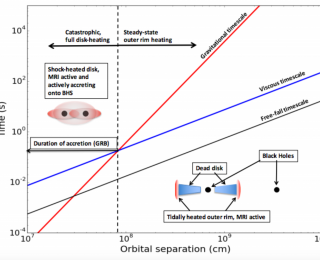
When Two Black Holes Become One…

When Two Black Holes Become One…

by Ashley Villar | Feb 19, 2016 | Daily Paper Summaries

The recent LIGO announcement has lead to exciting waves of new science. Today, we look at one theory about the potential gamma-ray burst associated with a gravitational wave.
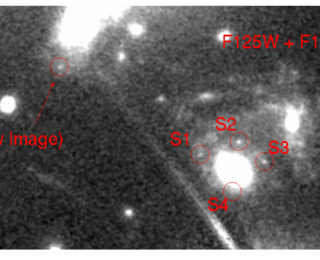
A Blast from the Past: Forecasting Supernova Refsdal

A Blast from the Past: Forecasting Supernova Refsdal

by Caroline Huang | Feb 17, 2016 | Daily Paper Summaries

In today’s astrobite, a group of astronomers experiences déjà vu while studying gravitational lensing.

« Older Entries
Next Entries »

Loading

Follow our socials

  • Bluesky
  • Facebook
  • Instagram
  • RSS Feed

More Posts About

AAS AGN astronomy astrophysics binary stars black holes cosmology dark matter dwarf galaxies exoplanets galaxies galaxy evolution gravitational waves habitability JWST Kepler Milky Way observations planetary science planet formation protoplanetary disks radio astronomy simulations solar system spectroscopy star formation stars stellar evolution supernovae theory

Posts by Category

  • Accessibility
  • Applications
  • Beyond
  • Book Reviews
  • Career Navigation
  • Classics
  • Climate Change
  • Course Assignments
  • Crossposts
  • Current Events
  • Daily Paper Summaries
  • Game Reviews
  • Guides
  • Historical Astronomy
  • Instrumentation
  • Interviews
  • Outreach
  • Personal Experiences
  • PRJ
  • Quick Notes
  • Satellites
  • Teaching
  • Undergraduate Research

More Astronomy

  • AAS
  • AAS Nova
  • astro-ph
  • AstroBetter
  • APOD

Read Astrobites in Other Languages

  • Astrobitos (Spanish)
  • Astropontos (Portuguese)
  • staryab (Farsi)

Listen to Astrobites

  • astro[sound]bites

Discover More Incredible Science

  • ScienceBites Network
  • RSS

© 2026 Astrobites | All Rights Reserved | Supported by AAS | Designed by Elegant Themes | Powered by WordPress