by Brett Deaton | Apr 22, 2015 | Daily Paper Summaries
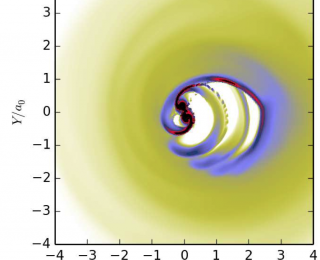
Quasar PSO J334.2028+01.4075 has a very healthy heart rate of 6.7 beats per decade, or once every 542 days. One explanation is that this guy hosts a pair of supermassive black holes. If true, then the astonishing interpretation of this quasar’s heart rate is that its black holes are only a few orbits away from merging!
by Andrew Emerick | Apr 21, 2015 | Daily Paper Summaries
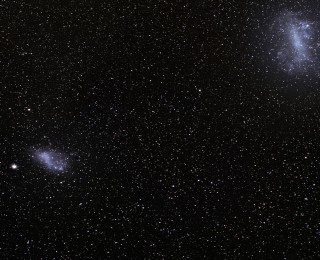
There is quite a lot left to learn about the smallest galaxies in our Universe, dwarf galaxies. Since they are small compared to galaxies like the Milky Way, they are challenging to observe directly, either because they are too dim or because they are too small to be resolved. The authors suggest a new detection method for these faint galaxies that takes advantage of ongoing and upcoming large surveys looking for, among other things, novae and supernovae.
by Gudmundur Stefansson | Apr 20, 2015 | Classics, Daily Paper Summaries
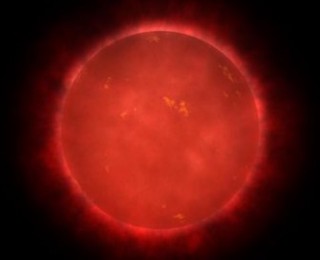
Heavy stars live like rock stars: they live fast, become big, and die young. Low mass stars, on the other hand, are more persistent, and live longer. Fusing hydrogen slow and steady wins the stellar age-race.

by Stacy Kim | Apr 17, 2015 | Daily Paper Summaries
The Milky Way grew by accreting many smaller galaxies. What did these doomed galaxies leave behind, and what could they say about the Milky Way’s early past?
by Ben Cook | Apr 15, 2015 | Daily Paper Summaries
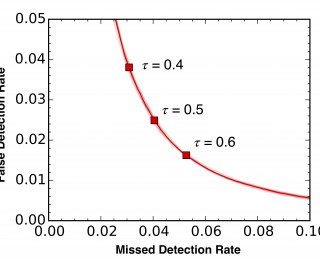
AutoScan was able to correctly identify real sources in the validation set 96% of the time, with a false detection (claiming an artifact to be a source) rate of only 2.5%.
by David Wilson | Apr 14, 2015 | Daily Paper Summaries
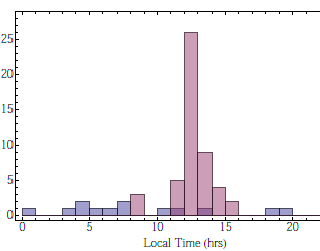
Over the past couple of decades the Parkes Radio Telescope in Australia has been picking up two types of mysterious signals, each lasting just a few milliseconds. One kind, the Fast Radio Bursts (FRBs), have come from seemingly random points in the sky at unpredictable times, and are thought to have a (thus far unknown) astronomical origin. The other signal, known as perytons, have been found by this paper to have an origin much close to home.
